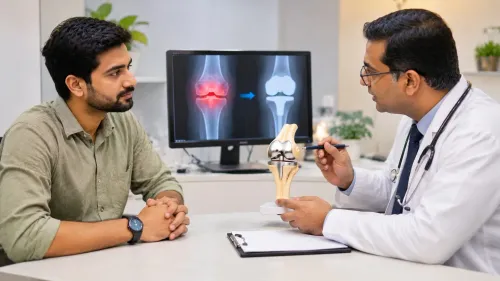
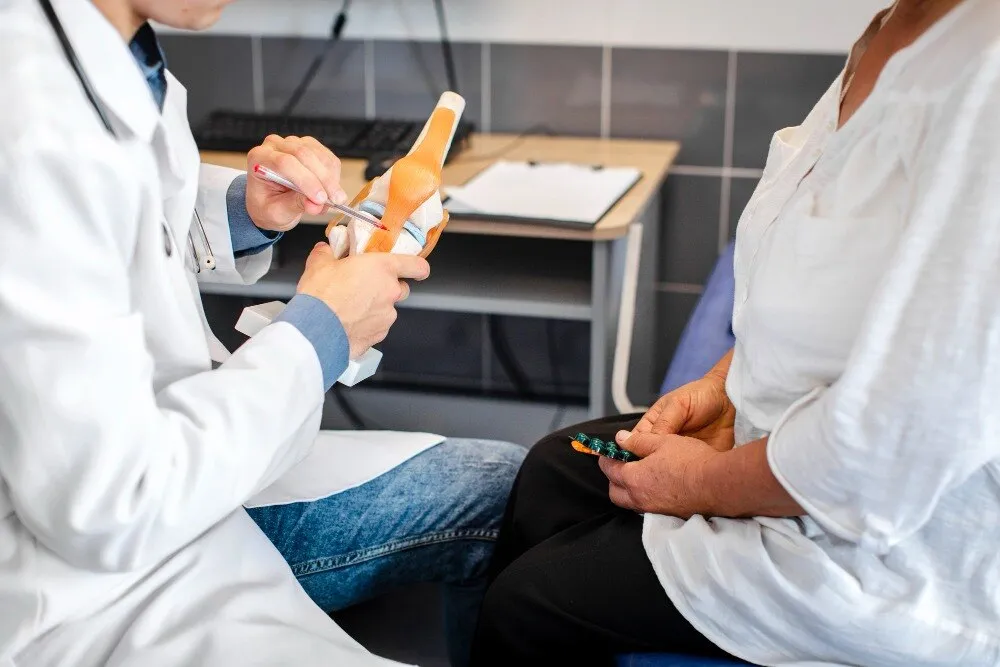
Pain or stiffness becomes a joint-replacement question when it changes how far you walk, how you sleep, or whether you can manage work and personal care. You will learn which symptoms need prompt assessment, what a consultation checks, which treatments to compare first, and how to decide whether surgery is appropriate.
Key takeaways
- Seek assessment when pain limits walking, sleep, stairs or daily activities.
- Repeated falls, deformity and worsening stiffness justify specialist review.
- A consultation does not commit you to joint replacement surgery.
- Bring medication details, previous scans and a clear list of mobility limits.
Which mobility changes justify a joint replacement assessment?
Seek an orthopaedic assessment when joint symptoms reduce what you can do, even if the pain is not unbearable. Arrange review when pain limits walking, stairs, work, sleep, driving, bathing or dressing; stiffness reduces range of motion; the joint looks deformed; you fall repeatedly; or you need help with ordinary activities.
Persistent symptoms that continue despite reasonable self-care and non-surgical treatment deserve attention. Rapidly worsening mobility loss needs earlier review.
- Moderate pain with a major reduction in walking distance can matter more than severe X-ray changes in someone who remains active.
- After an injury, inability to bear weight, sudden severe pain, a visibly deformed limb or rapidly increasing swelling needs urgent assessment for fracture or dislocation.
- A hot, swollen joint with fever or feeling unwell needs immediate medical care for possible infection.
- New bladder or bowel-control difficulty, numbness around the genitals or anus, or rapidly worsening leg weakness requires emergency assessment for a spinal nerve problem.
| Situation | What it means | Action |
|---|---|---|
| Pain with functional loss | The joint is affecting daily life | Request an orthopaedic assessment |
| Severe X-ray changes with little disability | Imaging alone does not prove surgery is needed | Discuss monitoring and non-surgical care |
| Rapid mobility decline | Function is deteriorating quickly | Seek earlier medical review |
| Search for “mobility problems needing joint replacement advice dhanori” | You need diagnosis before assuming replacement | Ask which joint is responsible and whether alternatives need investigation |
Does needing specialist advice mean you are ready for replacement surgery?
No. Specialist advice identifies the cause and the options; it does not automatically mean you are ready for replacement surgery. Hip or knee symptoms can come from the spine, bursae, tendons, nerves, inflammatory arthritis, fracture, infection or another condition.
Replacement is usually considered after an examination, appropriate imaging when needed, and a fair trial of non-surgical care that failed, gave inadequate relief or could not be tolerated. Compare the options below with your clinician:
| Option | What it may address | Important limitation |
|---|---|---|
| Therapeutic exercise and strengthening | Pain, stiffness and reduced function | Progress can take time and may cause short-term discomfort |
| Physiotherapy, activity changes and walking aids | Safer movement and reduced joint load | These do not reverse advanced joint damage |
| Weight-management support when relevant | Lower load on weight-bearing joints | It should support care, not become a condition for referral |
| Analgesic or anti-inflammatory medicines when safe | Symptom relief | Side effects and other medical conditions affect suitability |
| Corticosteroid injection | Short-term osteoarthritis relief, often around two to 10 weeks | It does not repair cartilage or justify repeated injections without a clear plan |
Treating inflammatory arthritis can change the treatment plan. An X-ray alone does not decide surgery, and age, sex, smoking, obesity or another medical condition should not automatically block referral; these factors affect preparation and operative risk.
The key question in a joint replacement assessment dhanori is whether expected functional improvement outweighs surgical risks and rehabilitation demands. It is an assessment, not a promise that every damaged-looking joint needs arthroplasty.
What happens during the consultation and which scans might you need?
The consultation starts with your history, not a scan. The clinician will ask when symptoms began, what triggers them, how far you walk, whether stairs or sleep are affected, and which tasks you can no longer perform.
The examination can include gait assessment, joint range-of-motion testing, muscle strength, limb alignment, deformity, tenderness and signs that pain comes from the spine or another source. Bring previous reports, but expect the examination to matter as much as the images.
For suspected knee arthritis, weight-bearing knee X-rays show alignment and joint-space loss while the joint carries load. Standing pelvis and hip X-rays show the hip joint and overall alignment. MRI clarifies soft tissue, cartilage, bone marrow, nerves or unusual disease; CT provides detailed bone anatomy and can help plan complex reconstruction.
Blood tests help investigate inflammatory arthritis or infection, but they do not replace examination.
| Test | What it shows | When it is useful |
|---|---|---|
| Weight-bearing X-ray | Alignment and joint-space loss under load | Suspected knee arthritis |
| Standing pelvis and hip X-ray | Hip joint and overall alignment | Hip symptoms |
| MRI | Soft tissue, cartilage, bone marrow, nerves and atypical pathology | Unclear or unusual symptoms |
| CT | Detailed bone anatomy | Complex reconstruction planning |
| Blood tests | Inflammation or infection clues | Suspected inflammatory arthritis or infection |
Routine imaging is not always needed for typical osteoarthritis. It becomes useful when symptoms are unusual, the diagnosis is uncertain, surgery is planned, or fracture or avascular necrosis must be considered. A mobility problem surgeon in Pune should explain how each test could change your treatment decision.
How should you prepare for a damaged-joint consultation?
Bring a one-page symptom record to a damaged-joint consultation Dhanori: note pain duration, exact location, triggers, walking distance, stair difficulty, night waking, and effects on work, exercise and personal care. Include falls, reduced movement and tasks you now avoid.
List every treatment you have tried and its result:
- Physiotherapy, exercises and weight-management efforts: record the duration and benefit.
- Injections, walking aids and medicines: record the benefit, duration of relief and side effects.
Bring a complete medicine list, drug allergies, diabetes or heart conditions, previous operations, smoking status, other medical problems, and every prior X-ray, MRI, CT scan or report.
Ask whether the named joint is truly causing the pain, or whether the spine, tendon, nerve, inflammatory disease or another problem needs investigation. Ask which non-surgical option remains reasonable.
| Ask about | Why it matters |
|---|---|
| Planned operation and implant choices | Confirms why this procedure fits your symptoms |
| Expected mobility and rehabilitation time | Sets realistic recovery goals |
| Post-surgery restrictions | Helps you plan work, driving and exercise |
| Infection, clots, dislocation, loosening and wear | Explains important complications |
| Revision surgery and delaying treatment | Clarifies the cost of proceeding early or waiting |
For arthroplasty advice near Yerwada, verify that the clinician is registered to practise in India and ask about experience with your specific joint. DR. DEEPAK MUNDE ORTHOPAEDIC SURGEON 08048032510 can provide an orthopaedic assessment in the Dhanori and Pune area; keep the appointment diagnostic, not an automatic surgical booking.
Related services
Hip Joint Replacement Specialist In Dhanori Pune Hip Joint Replacement Specialist In Dhanori Pune Dr Deepak Munde is A Reliable and Best Hip Joint Replacement Surgeon in Dhanori and Best Hip Joint Replacement Surgeon in Dhanori PUNE. View service → |
Knee Replacement Surgeon In Dhanori,Pune Knee Replacement Surgeon In Dhanori,Pune Dr Deepak Munde is A Reliable and Best Knee Replacement Surgeon in Dhanori and Best Knee Replacement Surgeon in Dhanori PUNE. View service → |
What decision should follow the assessment?
The assessment should end with a next step, not an automatic operation. Choose the option that matches your function, diagnosis and risk:
| Option | What it means | When it applies |
|---|---|---|
| Continued non-surgical care | Keep or adjust exercise, physiotherapy, medicines, aids, injections or weight-management support | Daily activities remain manageable, or treatment is improving function |
| Further tests or a second opinion | Clarify whether the painful joint is truly responsible | Examination and imaging disagree, or the diagnosis remains uncertain |
| Replacement planning | Discuss arthroplasty, preparation and rehabilitation | Pain or stiffness substantially limits life, the examination and imaging identify the same joint, and suitable treatment has not restored function |
| Urgent treatment for another diagnosis | Leave the elective replacement pathway | Fracture, dislocation, infection, nerve compression or another urgent condition is suspected |
Deferring surgery is sensible when symptoms respond, function remains acceptable, or diabetes, heart disease, smoking or another medical risk needs optimisation. Deferral is not neglect: record walking distance, falls, sleep disruption and treatment response, then arrange review if function declines.
A replacement can wear, loosen, dislocate or become infected, and revision surgery may follow. Recovery requires active rehabilitation, strength work and follow-up, so ask:
- What could happen if I wait three or six months?
- Which symptoms require earlier review?
- What preparation would lower my risk?
- What function is realistic after surgery?
The decision should follow function, examination and appropriate imaging—not an X-ray label or an online search result.
Frequently asked questions
Which mobility changes justify a joint replacement assessment?
Arrange an orthopaedic review when joint pain limits walking, stairs, work, sleep, driving, bathing or dressing. Worsening stiffness, deformity, repeated falls or needing help with ordinary activities also justify assessment.
Does needing specialist advice mean you are ready for replacement surgery?
No. Specialist advice does not commit you to surgery. The assessment compares your symptoms, examination findings, imaging and treatment options before you decide.
What happens during a damaged-joint consultation and which scans might you need?
The surgeon reviews your symptoms, daily limitations, medical history and previous treatment, then examines movement, strength, alignment and stability. Weight-bearing X-rays are commonly used; an MRI or CT scan is requested when X-rays do not answer the clinical question.
How should you prepare for a damaged-joint consultation?
Bring previous reports and scan images, a medication list, details of earlier treatments, allergy information and a written record of activities you can no longer do. Note when symptoms began and what makes them better or worse.
What decision should follow the assessment?
Choose the next step based on severity, imaging, health risks and your goals. Options can include targeted non-surgical care, further investigation, monitoring or discussing joint replacement and its recovery requirements.
Related services
Joint Replacement Surgeon In Dhanori,Pune Joint Replacement Surgeon In Dhanori,Pune Dr Deepak Munde is A Reliable and Best Joint Replacement Surgeon in Dhanori and Best Joint Replacement Surgeon in Dhanori PUNE. View service → |
Arthroplasty Surgeon In Dhanori,Pune Arthroplasty Surgeon In Dhanori,Pune Dr Deepakmunde is A Reliable and Best Arthroplasty Surgeon in Dhanori and Pune. View service → |
Keywords