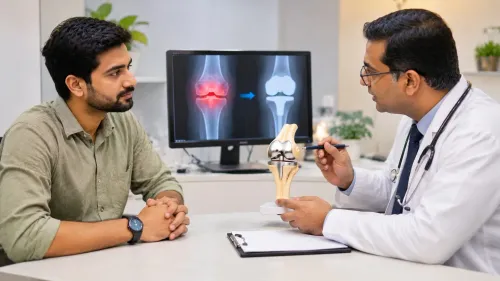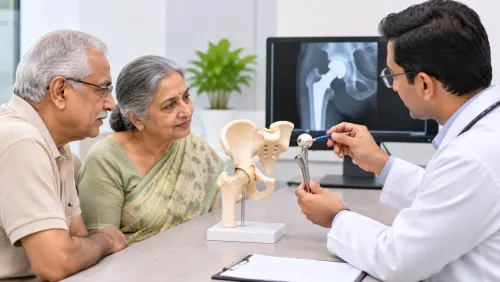

Hip arthritis can turn ordinary movements such as walking, climbing stairs, putting on socks and rising from a chair into painful, slow tasks. You will learn how clinicians identify the pain source, what treatment to try first, how to track progress and when persistent symptoms justify a hip replacement evaluation.
Key takeaways
- Groin pain that worsens with walking often points to the hip joint.
- Ask about examination, hip X-rays and tests for urgent causes of pain.
- Try activity changes, physiotherapy, walking support and prescribed pain relief first.
- Discuss replacement evaluation when pain limits daily life despite nonsurgical treatment.
How hip arthritis changes the way you move
Deep pain in the groin is the strongest clue that the hip joint is causing your mobility problem. It can spread to the buttock, front of the thigh or knee, then worsen when you walk, climb stairs, rise from a chair or turn in bed.
Hip arthritis can also cause a shorter walking distance and a limp.
Watch for these movement changes:
- Reduced inward hip rotation: turning your knee and foot inward becomes painful or limited, often before walking becomes severely restricted.
- Difficulty putting on socks or shoes: bending the hip and rotating the leg becomes harder.
- Trouble getting into a car: lifting the leg, turning your body and lowering into the seat may provoke groin pain.
- Pain on stairs or when standing: pushing up from a chair becomes slower, and you may lean away from the painful side.
Pain from the lower back often travels below the knee or comes with tingling, numbness or weakness. Sacroiliac pain is usually felt near the buttock; knee disease is centred around the knee. A muscle strain follows a specific injury and hurts with resisted movement.
These patterns overlap, so do not assume every painful hip is arthritis.
If you are seeking hip arthritis treatment for mobility problems in Dhanori, describe exactly what triggers pain and how far you can walk. A clinician can then compare your gait, hip movement and strength with your spine and knee before recommending imaging.
How a clinician confirms the pain source and checks for urgent problems
A clinician starts by asking where the pain is, when it began, what triggers it, and how it limits walking, stairs, dressing, driving and sleep. Deep groin pain supports a hip source, but buttock, thigh or knee pain can come from the lower back, sacroiliac joint, bursitis, muscle strain or a stress fracture.
Whether you see a hip mobility problem doctor in Pune or elsewhere, expect a walking assessment, hip rotation and flexion checks, muscle-strength testing, leg-length comparison, and examination of the spine and knee.
Standing pelvis or hip X-rays usually show joint-space narrowing, osteophytes and bone changes. A striking X-ray does not prove that arthritis is causing all your pain, and mild changes do not rule out disabling symptoms.
MRI or CT is reserved for diagnostic uncertainty or suspected fracture, tendon disease or another condition; blood tests become important when infection or inflammatory arthritis is suspected.
Seek prompt medical assessment rather than booking a routine appointment if you have:
- Sudden severe hip pain, especially after a fall
- Inability to bear weight, or a shortened or rotated leg
- A hot, swollen joint with fever or feeling acutely unwell
- New leg weakness with loss of bladder or bowel control
- New calf swelling or pain, chest pain, or sudden breathlessness
These signs can indicate fracture, joint infection, nerve compression or a blood clot, not an ordinary arthritis flare.
What to try before considering an operation
Start with guided exercise, not complete rest. A physiotherapist can prescribe hip-strengthening, range-of-motion and balance work, then build walking distance gradually. Weight reduction, if appropriate, decreases load on the joint. Heat before exercise and an ice pack wrapped in cloth afterward can ease symptoms.
| Option | What it can do | Important caution |
|---|---|---|
| Exercise therapy | Improves strength, hip movement and walking confidence | Stop sharp pain and progress gradually |
| Anti-inflammatory medicine | Reduces pain during activity | Ask a clinician first if you have ulcers, kidney disease, heart disease or take blood thinners |
| Paracetamol | Offers short-term pain relief | Follow the pack dose and check combination medicines |
| Injection | May provide temporary relief when pain blocks rehabilitation | A clinician must confirm the pain source before injection |
A useful hip arthritis mobility problems treatment plan in Dhanori should match your examination, other illnesses and current medicines. Avoid relying on painkillers alone; stronger walking usually comes from combining symptom control with regular, low-impact movement such as cycling or water exercise.
- Hold a cane in the hand opposite the painful hip.
- Adjust its handle to your wrist crease while standing upright; keep your elbow slightly bent.
- Move the cane and painful leg forward together, then step through with the stronger leg.
- Use a walker if you need support on both sides, and move it only as far as you can safely reach.
- Do not pull yourself up using the walker; rise from the chair first, then grip it.
- Replace worn rubber tips and remove loose rugs and cables from walking routes.
How to judge improvement and when replacement evaluation is reasonable
Judge treatment by what your hip lets you do, not by an X-ray alone. Record your pain from 0 to 10, walking time or distance, number of rest breaks, stair ability, sleep disruption and pain-medicine use each week. Improvement means better function, not merely a lower pain score.
A replacement evaluation becomes reasonable when pain, stiffness or loss of function continues to restrict work, sleep, walking or personal care despite an appropriate trial of non-surgical treatment. Persistent symptoms should match examination findings and joint damage on imaging.
Track these practical signs:
- You walk farther, climb stairs more easily or rise from a chair with less support.
- You can put on socks, enter a car and sleep with fewer interruptions.
- Your limp, painful hip rotation and need for a stick or pain medicine decrease.
| Finding | What it adds | When replacement discussion is reasonable |
|---|---|---|
| Symptoms and function | Persistent groin, buttock, thigh or knee pain with stiffness and reduced daily activity | Non-surgical care has not restored acceptable function |
| Examination | Painful restricted movement, especially internal rotation, plus a limp or weakness | Findings support the hip as the main pain source |
| X-ray | Joint-space narrowing, osteophytes and bone changes | Imaging confirms arthritis alongside symptoms and examination |
X-ray severity does not reliably predict pain. Age, body size or an abnormal image alone should not determine surgery. For a hip replacement evaluation in Dhanori, ask for a personalised risk-benefit review, including expected mobility, anaesthesia risks and rehabilitation demands.
What to ask at a hip consultation in Dhanori or nearby Pune
Take your medication list, previous X-rays or MRI reports, medical conditions, allergies and a short record of walking limits to the appointment. Note how far you walk, whether you need a cane, and which tasks remain difficult; these details help compare treatment with your actual goals.
Choose a hip arthritis surgeon Dhanori or a hip specialist near Vishrantwadi by checking registration, relevant orthopaedic training and experience with hip replacement. Ask who will perform the operation, where it will take place, and whether the same team provides imaging, anaesthesia assessment, physiotherapy and follow-up.
DR. DEEPAK MUNDE ORTHOPAEDIC SURGEON 08048032510 is one local option to assess using these practical checks, not location alone.
If replacement becomes appropriate, ask these questions before consenting:
- What findings on my examination and standing hip or pelvis X-ray support surgery?
- What pain, blood-clot, infection, nerve, dislocation and anaesthetic risks apply to me?
- Who will administer anaesthesia, and what medical tests or medication changes are needed beforehand?
- When will I stand and walk, what equipment will I need at home, and how many physiotherapy visits are expected?
- Which movements, driving plans, work duties and high-impact activities will be restricted?
- Who handles wound concerns, fever, increasing pain or calf swelling after discharge?
- When are follow-up reviews and repeat X-rays scheduled?
Compare the options clearly:
| Option | What to verify | Warning sign |
|---|---|---|
| Routine consultation | Diagnosis, alternatives and investigations | Immediate surgery pressure |
| Replacement pathway | Surgeon, hospital, anaesthesia and rehabilitation plan | Vague answers about aftercare |
| Follow-up | Named contact and review dates | No emergency instructions |
Related services
Hip Joint Replacement Specialist In Dhanori Pune Hip Joint Replacement Specialist In Dhanori Pune Dr Deepak Munde is A Reliable and Best Hip Joint Replacement Surgeon in Dhanori and Best Hip Joint Replacement Surgeon in Dhanori PUNE. View service → |
Arthroplasty Surgeon In Dhanori,Pune Arthroplasty Surgeon In Dhanori,Pune Dr Deepakmunde is A Reliable and Best Arthroplasty Surgeon in Dhanori and Pune. View service → |
Frequently asked questions
How does hip arthritis cause mobility problems?
It causes deep groin pain, stiffness and reduced hip movement, making walking, stair climbing, chair transfers and turning in bed harder.
How does a clinician confirm the hip is causing the pain?
The clinician reviews your symptoms, examines hip movement and walking, checks nearby areas, and may order hip X-rays or other tests.
What can you try before hip replacement?
Discuss activity changes, physiotherapy, weight management, walking aids and suitable pain relief with your clinician before considering an operation.
When is hip replacement evaluation reasonable?
Seek an evaluation when pain and stiffness restrict daily activities, disturb sleep or persist despite a suitable trial of nonsurgical treatment.
What should you ask at a hip consultation in Dhanori or Pune?
Ask what is causing the pain, which tests you need, what treatment to try first, how improvement will be measured and when surgery becomes appropriate.
Related services
Joint Replacement Surgeon In Dhanori,Pune Joint Replacement Surgeon In Dhanori,Pune Dr Deepak Munde is A Reliable and Best Joint Replacement Surgeon in Dhanori and Best Joint Replacement Surgeon in Dhanori PUNE. View service → |
Orthopedic Specialist/Orthopedic Surgeon In Dhanori,Pune Orthopedic Specialist/Orthopedic Surgeon In Dhanori,Pune Dr Deepak Munde is A Reliable and Best Orthopedic Specialist and Orthopedic Surgeon in Dhanori and Best Orthopedic Surgeon in PUNE. Dr. View service → |
Keywords