Shoulder pain that lasts beyond a short injury or keeps returning deserves a fresh diagnosis, not an automatic operation. You will learn how to recognise urgent symptoms, judge whether non-surgical care was adequate, and identify the findings that make a surgical discussion reasonable.
Key takeaways
- Seek urgent care for sudden weakness, deformity, fever, chest pain, or severe injury-related pain.
- Request reassessment when pain persists, returns, worsens, or disrupts sleep and daily tasks.
- Confirm the diagnosis and document medication, physiotherapy, injections, imaging, and treatment results.
- Discuss surgery when pain, weakness, or restricted movement continues despite an appropriate treatment trial.
When does ongoing shoulder pain need reassessment or urgent care?
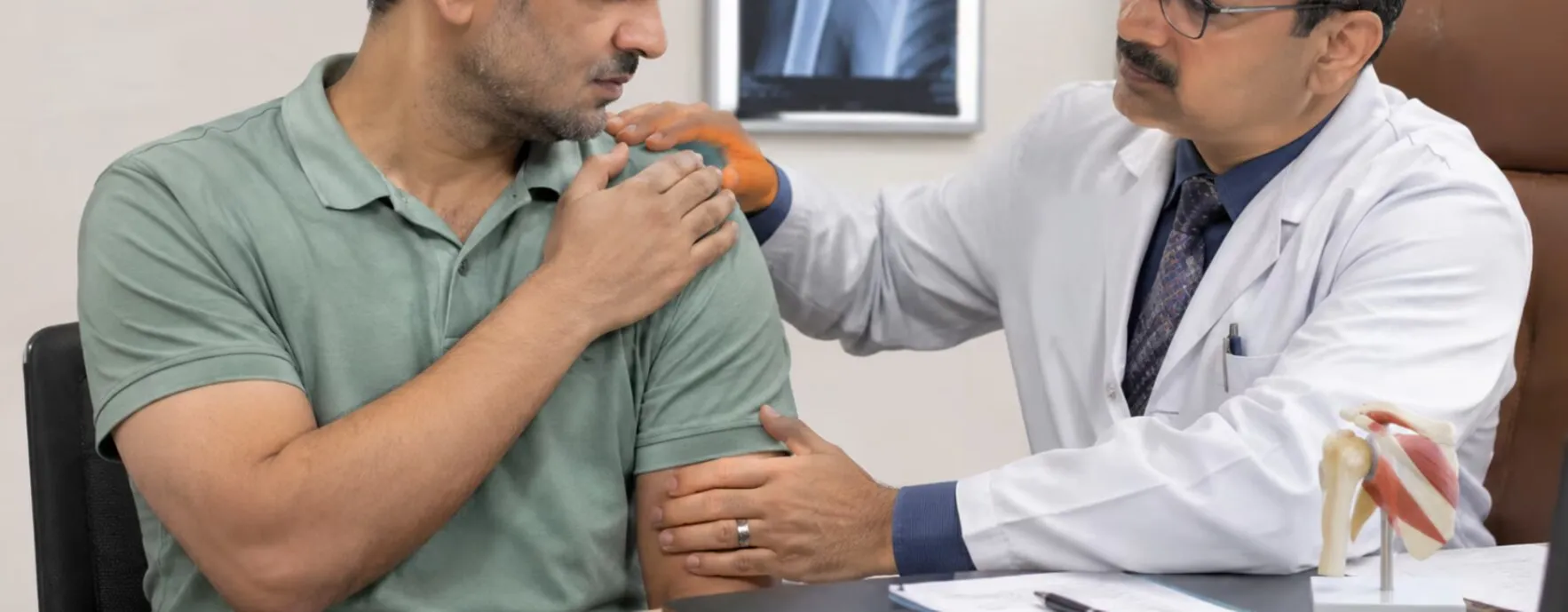
Persistent shoulder pain needs reassessment when symptoms last several weeks, return after temporary relief, or continue to disturb sleep, work, dressing, lifting or reaching. A changed pattern matters: worsening pain, new weakness, reduced movement, or pain that no longer responds to the previous plan can indicate a new injury, nerve involvement or a different diagnosis.
Seek urgent assessment for any of these warning signs:
- A deformed shoulder after an injury, or suspected dislocation or fracture
- Sudden inability to raise the arm after trauma
- Fever with a hot, red or swollen shoulder joint
- Chest pain or breathlessness
- Sudden weakness or numbness in the arm, hand or face
- Severe night pain with unexplained weight loss
Chest pain, breathlessness and new neurological symptoms must not wait for an elective shoulder surgery appointment. Call emergency services or attend an emergency department, especially when symptoms are sudden or severe.
Arrange a routine review when pain is persistent but you have none of these emergency signs. Take the previous treatment details, scan reports, injection dates and physiotherapy notes.
If you search for a shoulder problem doctor near me, assess whether the clinician examines the neck and nerves as well as the shoulder; pain referred from the neck or chest can look like a shoulder problem.
What could be causing shoulder pain that treatment has not fixed?
The key examination question is whether you cannot move the arm yourself, or whether someone else cannot move it for you. Weakness with preserved passive movement points toward a rotator-cuff or nerve problem; restriction in both directions suggests adhesive capsulitis or arthritis.
| Cause | Clues on symptoms and examination |
|---|---|
| Rotator-cuff tendinopathy or tear | Painful overhead reach; weakness, especially lifting or rotating the arm, with passive movement relatively preserved |
| Bursitis or subacromial pain | Painful arc between shoulder-height and overhead movement; lying on that side hurts |
| Frozen shoulder | Gradually increasing pain and stiffness; both active and passive movement are restricted |
| Glenohumeral or acromioclavicular arthritis | Deep joint pain, creaking and reduced movement; pain over the top of the shoulder suggests acromioclavicular disease |
| Instability or labral injury | Giving way, clicking or catching after injury, throwing or positions above the head |
Neck pain, tingling or pain extending below the elbow raises cervical radiculopathy. Suprascapular neuropathy can cause weakness and muscle wasting without typical shoulder tenderness. Pain unrelated to shoulder movement, especially with chest symptoms or breathing trouble, can come from the heart, lungs or diaphragm and needs medical assessment rather than shoulder surgery.
Treatment fails when the original diagnosis was wrong, a tear remains untreated, rehabilitation exercises were not followed, a cervical nerve problem was missed or a new injury occurred. A shoulder specialist in Pune should match the examination with imaging, because an abnormal scan alone does not identify the pain source.
Has non-surgical treatment had a fair and well-documented trial?
Continuing conservative care is sensible only when it removed the provoking load, was medically safe, and produced measurable improvement—not merely because you attended several appointments. Use this checklist:
1. Activity modification: Did you reduce the lifting, reaching, overhead work or sport that triggered pain? If symptoms returned as soon as the load resumed, the plan has not solved the cause.
2. Medicines: Did the prescribed analgesic or anti-inflammatory treatment improve pain enough for movement and sleep? Review stomach, kidney, blood-pressure and other risks before continuing or changing it.
3. Physiotherapy: Did treatment include a staged exercise plan and a structured home programme? Record whether movement, strength, dressing, lifting, sleep and work improved, and how long the improvement lasted.
4. Injection: Was a corticosteroid injection appropriate for the diagnosis? It can reduce pain long enough to exercise, but relief does not prove that surgery is necessary. Tell the surgeon its exact number and dates; repeated or closely timed injections affect tendon-quality and infection considerations around an operation.
5. Recovery context: Diabetes, thyroid disease, smoking, heavy work, overhead sport and missed home exercises can slow recovery or change the result. Address these factors before declaring treatment a failure.
A shoulder pain surgeon in Dhanori will need this timeline, including flare-ups and functional gains. Continuing care makes sense when function is steadily improving; a review becomes reasonable when pain and disability persist despite a complete, documented trial.
Which findings make shoulder surgery worth discussing?
A surgical consultation becomes reasonable when a full-thickness rotator-cuff tear causes marked weakness, an injury produces sudden loss of lifting strength, the shoulder repeatedly dislocates, or advanced joint damage causes substantial pain and disability.
It is also reasonable after a documented programme of activity modification, appropriate medication, physiotherapy and any suitable injection has failed to restore sleep, movement, strength or daily function.
| Operation | Purpose | When it applies |
|---|---|---|
| Arthroscopic rotator-cuff repair | Reattaches a repairable torn tendon | Persistent weakness or disability, or an acute traumatic tear |
| Labral repair or stabilisation | Reduces recurrent instability | Repeated dislocations or giving-way linked to labral damage |
| Capsular release or manipulation under anaesthesia | Restores movement in a severely stiff shoulder | Selected frozen shoulders after non-operative treatment fails |
| Shoulder replacement | Replaces a destroyed painful joint | Advanced glenohumeral arthritis or severe joint destruction |
Routine subacromial decompression offers little clinically important benefit for atraumatic pain without a specific structural problem; ask what lesion the operation treats. Surgery is the wrong choice when pain comes from the neck, imaging shows only mild age-related changes without functional loss, a medical cause remains untreated, or symptoms are improving with exercise or injection.
MRI or ultrasound must match the examination, weakness and disability. A shoulder surgery specialist for persistent shoulder pain in Dhanori should assess that whole pattern, not operate on a scan alone.
How should you prepare for a shoulder surgery consultation?
Take a one-page record of symptoms, previous treatment and your goals to the appointment. Include when pain began, any injury, night pain, lost movement, weakness, work limits and activities you want to resume.
Ask the surgeon:
- What is the working diagnosis, and which examination findings support it?
- Why is each scan needed, and does it match my weakness, movement and disability?
- Which non-operative options remain, and what result should each provide?
- What meaningful improvement is realistic, not just technical success?
- What complications could occur?
- How long will rehabilitation take, what exercises are required, and when can I work?
- What is the likely result of deferring surgery?
Bring the dates and details of injections and physiotherapy. Tell the surgeon if you smoke or have diabetes or thyroid disease; these factors can affect healing, infection risk and rehabilitation.
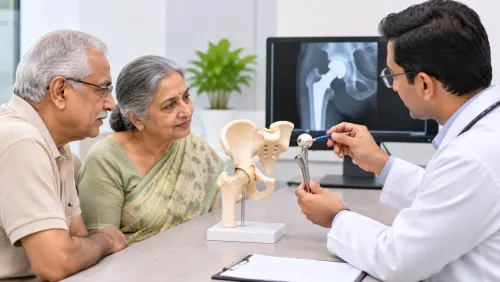
For replacement surgery, clarify why the proposed implant fits your shoulder.
| Option | Main requirement | When it may fit |
|---|---|---|
| Anatomic total shoulder replacement | Functioning rotator cuff and adequate bone stock | Advanced joint destruction with preserved cuff function |
| Reverse shoulder replacement | Deficient or irreparable cuff, with assessment of bone, nerves and deformity | Cuff-tear arthropathy or loss of elevation |
The choice also depends on your goals and the different restrictions and complications of each implant. If you search “shoulder surgery consultation Dhanori,” assess recognised orthopaedic training, shoulder-and-elbow practice, hospital privileges and experience with the proposed operation—not location or ranking.
DR. DEEPAK MUNDE ORTHOPAEDIC SURGEON 08048032510 is one local option to evaluate alongside a second opinion when the decision remains uncertain.
Related service
Shoulder Surgery Specialist In Dhanori,Pune Shoulder Surgery Specialist In Dhanori,Pune Dr Deepak Munde is A Reliable and Best Shoulder Surgery Specialist in Dhanori and Best Shoulder Surgery Specialist in Dhanori PUNE. View service → |
Frequently asked questions
When does ongoing shoulder pain need reassessment or urgent care?
Arrange reassessment when pain lasts several weeks, returns after temporary relief, worsens, causes new weakness or reduced movement, or disrupts sleep, work, dressing, lifting, or reaching. Seek urgent care after a major injury, or for sudden weakness, visible deformity, fever, chest pain, or severe pain.
What could cause shoulder pain that treatment has not fixed?
Persistent pain can result from a rotator cuff tear, frozen shoulder, shoulder arthritis, instability, bursitis, tendon disease, a new injury, or nerve-related pain from the neck. A changed symptom pattern can signal a different diagnosis.
How do you know whether non-surgical treatment had a fair trial?
Record the diagnosis, medication names and duration, physiotherapy exercises and attendance, activity changes, injections, imaging, and your response to each treatment. A specialist can then judge whether the plan was appropriate and long enough for your condition.
Which findings make shoulder surgery worth discussing?
Discuss surgery when imaging and examination match persistent pain, weakness, instability, a significant rotator cuff tear, advanced arthritis, or restricted movement that continues despite appropriate non-surgical care. The decision also depends on your goals, health, work demands, and expected recovery.
How should you prepare for a shoulder surgery consultation?
Bring scan reports and images, a symptom timeline, treatment records, medication and allergy lists, previous operation details, and specific questions about alternatives, risks, recovery time, driving, work, and physiotherapy.
Keywords