
Pain, stiffness and declining mobility do not automatically mean you need an artificial joint. You will learn which symptoms require a specialist assessment, how surgeons distinguish replacement from other treatments, and what to check before agreeing to surgery.
Key takeaways
- Consider replacement after persistent pain and disability despite proper non-surgical care.
- Compare joint replacement with physiotherapy, medicines and joint-preserving procedures.
- Arrange medical tests, medication advice, home support and follow-up before surgery.
- Seek urgent help for chest pain, breathing trouble, severe swelling or wound drainage after surgery.
Which damaged joints and symptoms point toward a replacement consultation?
Replacement becomes a consideration when joint pain and loss of function continue despite properly delivered non-surgical care. For anyone researching joint replacement for damaged joints in dhanori in pune, the consultation starts by finding the actual pain source, not by reading an X-ray alone.
| Joint | Typical symptoms | Daily activities affected |
|---|---|---|
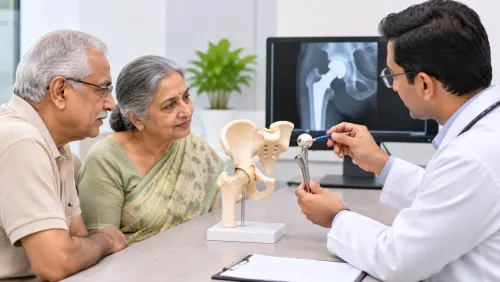
| Hip | Groin pain, stiffness and pain when walking; difficulty putting on shoes or socks | Bending, dressing, walking and getting into a car |
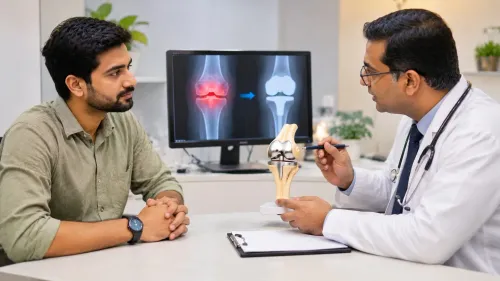
| Knee | Weight-bearing pain, stair difficulty, repeated swelling and visible deformity | Walking, standing, climbing stairs and rising from a chair |
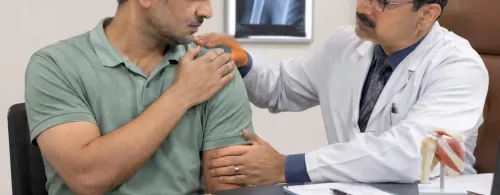
| Shoulder | Pain with reaching, dressing or lifting, with reduced movement | Putting on clothes, combing hair, reaching shelves and carrying objects |
Arrange a joint replacement consultation near Dhanori if you have pain at rest or at night, reduced walking distance, difficulty climbing stairs, loss of movement, repeated swelling or sleep disruption. Seek assessment when exercise therapy, weight management where appropriate, medicines, injections or activity changes have failed to restore useful function.
An X-ray finding alone does not decide treatment. Pain from the spine, bursae, tendons, inflammatory arthritis or infection can mimic joint damage, and replacing the joint will not treat the wrong source. Your assessment should include symptom history, physical examination and movement or walking assessment, with imaging or blood tests when the diagnosis requires them.
When is replacement better than physiotherapy, medicines or joint-preserving treatment?
Replacement becomes the better option when pain and loss of function continue despite properly delivered non-surgical care, and examination and imaging confirm widespread joint damage.
A practical damaged joint treatment in Dhanori ladder includes:
- Exercise therapy and physiotherapy to maintain strength, movement and balance.
- Weight management where appropriate, because excess load increases hip and knee stress.
- Analgesics, anti-inflammatory medicines, injections, braces and activity changes for suitable patients.
- Arthroscopy or joint-preserving surgery for selected tears, loose fragments, focal cartilage defects or reconstructable damage.
Arthroscopy cannot rebuild a joint whose cartilage has been lost across multiple surfaces. Osteoarthritis may therefore progress to replacement, while traumatic injury follows a different path: a fracture may need fixation with plates, screws or a nail.
A selected displaced hip fracture may instead need hemiarthroplasty or total hip replacement, depending on fracture pattern, bone quality, mobility and medical fitness.
Assessment includes your symptom history, physical examination, walking or movement assessment and standing X-rays. MRI can clarify cartilage, tendon or soft-tissue damage; CT can define fracture anatomy and bone quality; blood tests help investigate infection or inflammatory disease and prepare for surgery.
Age, smoking, obesity or another medical condition should not alone block referral. Diabetes, anaemia, anticoagulants, heart disease and lung disease affect preparation and timing, so the team may optimise them before elective surgery. Do not stop prescribed medicines without instructions.
Which replacement procedure and surgeon should you choose?
Choose the procedure that matches the damaged surfaces, compartments, bone quality and implant history—not the procedure with the shortest name.
| Option | Surfaces or compartments addressed | When it applies |
|---|---|---|
| Total replacement | Replaces the joint’s damaged surfaces with prosthetic components | Disease affects multiple compartments or the whole joint |
| Partial or unicompartmental knee replacement | Replaces one knee compartment while preserving the healthy compartments | Arthritis is limited to one compartment, with suitable ligaments and alignment |
| Resurfacing | Caps or reshapes damaged bone while preserving more of the patient’s bone | Selected patients with adequate bone quality and a suitable joint pattern |
| Revision replacement | Removes, repairs or replaces a failed implant and may rebuild lost bone | Infection, loosening, wear, fracture, instability or severe stiffness after earlier surgery |
A partial knee replacement is not a smaller total replacement; disease in another compartment can cause failure. Resurfacing preserves more bone, but it does not suit every age, anatomy or activity level. Revision surgery addresses a failed implant, not a first-time joint problem.
Use this checklist when comparing a joint replacement surgeon Dhanori in Pune or an arthroplasty specialist in Pune:
- Verify recognised orthopaedic qualification and registration.
- Ask about experience with your joint and proposed procedure.
- Compare implant design and fixation options.
- Confirm hospital imaging, blood tests, emergency and revision capacity.
- Check anaesthesia arrangements, infection-prevention protocol and physiotherapy access.
- Request the follow-up schedule and plans for infection, loosening or stiffness.
At a consultation with DR. DEEPAK MUNDE ORTHOPAEDIC SURGEON 08048032510, ask which joint and compartment will be replaced, why alternatives are unsuitable, what the fee includes, and how complications or revision will be managed.
Related services
Joint Replacement Surgeon In Dhanori,Pune Joint Replacement Surgeon In Dhanori,Pune Dr Deepak Munde is A Reliable and Best Joint Replacement Surgeon in Dhanori and Best Joint Replacement Surgeon in Dhanori PUNE. View service → |
Arthroplasty Surgeon In Dhanori,Pune Arthroplasty Surgeon In Dhanori,Pune Dr Deepakmunde is A Reliable and Best Arthroplasty Surgeon in Dhanori and Pune. View service → |
What must you arrange before joint replacement surgery?
Your team sets the timing of the preoperative workup according to your health, the joint involved and the hospital’s protocol; there is no universal schedule.
1. Arrange medical clearance, blood tests and a medication review. The assessment should cover diabetes control, blood pressure, anaemia, heart health and lung health. Give the team your complete medicine list, including anticoagulants, steroids and diabetes medicines. Do not stop any of these without instructions from the treating team.
2. Complete dental, skin or urinary infection checks when your surgeon or anaesthetist indicates them. Reduce smoking, address excess weight where appropriate, improve nutrition and complete prehabilitation. Strengthening exercises and practising bed-to-chair transfers, walking and use of crutches or a walker can make early recovery safer.
3. Prepare your home before admission. Remove loose rugs and clutter, place frequently used items within reach, arrange a firm chair with suitable height and set up a practical sleeping space. Organise transport home and help with meals, bathing and stairs after discharge.
The surgeon and anaesthetist decide whether surgery proceeds if they find a correctable infection or an uncontrolled medical risk. Treating that problem first can prevent wound infection, delayed healing, breathing complications or cancellation after admission.
What happens in hospital, and which recovery symptoms need urgent help?
In the operating room, anaesthesia may be spinal, general, or combined with a regional nerve block. The surgeon makes an incision, removes or reshapes damaged bone and cartilage, prepares the surfaces, places metal, ceramic or polyethylene components, checks stability and movement, then closes the tissues and applies a dressing.
| Stage | What happens |
|---|---|
| Recovery room | Staff monitor breathing, blood pressure, alertness, pain and the operated limb. |
| Pain control | Paracetamol, anti-inflammatory medicine, local anaesthetic and other prescribed drugs are combined where suitable. |
| Early movement | You begin assisted transfers and walking, often with a frame. |
| Clot prevention | Take the prescribed anticoagulant or other thromboprophylaxis and use compression measures as instructed. |
| Rehabilitation | Physiotherapy teaches exercises, safe walking, transfers and stair technique. |
Swelling, weakness and limited motion are expected early, but persistent or worsening problems need medication review, physiotherapy or investigation. Discharge depends on controlled pain, safe transfers, walking or stair ability, urination, wound condition, medical stability and home support—not a fixed number of days.
Complications include infection, clots, bleeding, nerve or blood-vessel injury, fracture, hip dislocation, stiffness, persistent pain, implant wear or loosening, and revision surgery. A successful operation cannot guarantee complete pain relief.
After hip or knee replacement, seek urgent assessment for new calf or thigh swelling, sudden breathlessness or chest pain, fever with worsening redness or drainage, or sudden inability to bear weight.
After recovery, walking, cycling and swimming are joint-friendlier than repeated high-impact activity; running, jumping and contact sports need individual advice. Registry estimates suggest 58.7% of total hips and 77.5% of total knees remain unrevised at 25 years, but no individual result is guaranteed.
Frequently asked questions
Which symptoms point toward a joint replacement consultation?
Persistent joint pain, stiffness, reduced walking or hand function, night pain and difficulty with daily activities warrant an assessment, especially after non-surgical treatment has failed.
When is joint replacement better than physiotherapy or medicines?
Replacement becomes an option when diagnosed joint damage causes ongoing pain and functional loss despite an appropriate course of physiotherapy, medicines or other joint-preserving care.
How should you choose a joint replacement surgeon?
Ask about the surgeon’s experience with your affected joint, the proposed implant and procedure, expected rehabilitation, risks, hospital arrangements and follow-up plan.
What should you arrange before joint replacement surgery?
Complete the requested medical evaluation, review every medicine with the surgical team, plan transport and home assistance, prepare rehabilitation support and confirm follow-up appointments.
Which recovery symptoms need urgent medical help?
Seek urgent help for chest pain, breathing difficulty, sudden calf swelling, uncontrolled pain, high fever, wound drainage, spreading redness or a new loss of limb movement.
Related services
Hip Joint Replacement Specialist In Dhanori Pune Hip Joint Replacement Specialist In Dhanori Pune Dr Deepak Munde is A Reliable and Best Hip Joint Replacement Surgeon in Dhanori and Best Hip Joint Replacement Surgeon in Dhanori PUNE. View service → |
Knee Replacement Surgeon In Dhanori,Pune Knee Replacement Surgeon In Dhanori,Pune Dr Deepak Munde is A Reliable and Best Knee Replacement Surgeon in Dhanori and Best Knee Replacement Surgeon in Dhanori PUNE. View service → |
Shoulder Surgery Specialist In Dhanori,Pune Shoulder Surgery Specialist In Dhanori,Pune Dr Deepak Munde is A Reliable and Best Shoulder Surgery Specialist in Dhanori and Best Shoulder Surgery Specialist in Dhanori PUNE. View service → |
Keywords