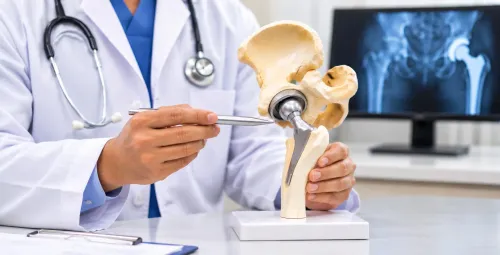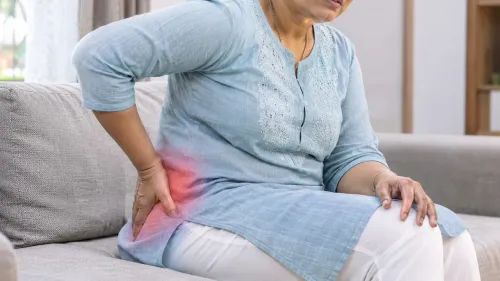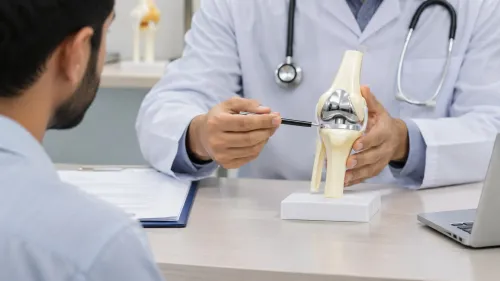
Severe knee pain can turn ordinary tasks—rising from a chair, walking to a shop, climbing stairs or sleeping in one position—into planned, uncomfortable efforts. You will learn which movements knee replacement can improve, when surgery is worth considering, what alternatives remain, and how recovery affects daily life in Pune.
Key takeaways
- Knee replacement can ease walking, chair transfers and standing-related pain.
- Consider surgery when pain limits sleep, work, mobility or personal care.
- Partial replacement suits damage confined to one knee compartment.
- Track recovery through walking distance, strength, pain and daily independence.
Which daily movements can knee replacement improve?
Knee replacement can reduce arthritis pain enough to make walking, standing from a chair and everyday transfers less demanding. Many people walk farther, sleep with fewer position-related aches, shop, work and manage personal care with greater independence. These are practical benefits of knee replacement in Dhanori, not simply changes seen on an X-ray.
| Movement | What may improve | What remains limited |
|---|---|---|
| Walking | Less pain and better confidence on level ground | Long walks still require gradual strengthening |
| Standing from a chair | Easier rising, especially from a firm, raised seat | Very low chairs can remain difficult |
| Stairs | Better comfort and leg control | Alternating steps may take time to relearn |
| Getting in or out of a vehicle | Less pain while bending and pivoting | A high step or deep car seat can still strain the knee |
| Sleep | Fewer night-time aches caused by knee position | Swelling or stiffness can interrupt sleep during recovery |
Pain relief is different from stability and range of motion. Replacing damaged joint surfaces can reduce grinding pain; rehabilitation helps rebuild strength and confidence; the final bending range depends on the preoperative stiffness, tissues and healing.
The result is not guaranteed to feel like a normal knee, bend without limits or tolerate running, jumping and other high-impact sport.
Judge knee pain surgery benefits by walking distance, stair use, sleep and necessary activities completed with less effort. A successful outcome can mean independent daily movement, even when you still need sensible activity limits and ongoing exercises.
When is surgery reasonable, and when is it premature?
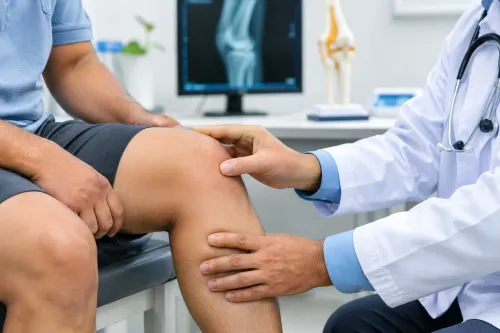
The question is whether knee pain surgery benefits you now, not whether an X-ray looks abnormal. Surgery becomes reasonable when pain persists despite treatment, wakes you at night, shortens your walking distance, or makes chairs, stairs, vehicles and basic tasks difficult.
A visible deformity strengthens the case, but the decision requires a physical examination, X-rays, medical-risk review and your movement goals.
Look for several problems together:
- Persistent pain or night pain
- Reduced walking distance or increasing dependence on support
- Difficulty with basic activities
- Deformity, stiffness or instability on examination
- Little improvement after properly performed physiotherapy or clinician-prescribed medicines
| Option | What it does | When it applies |
|---|---|---|
| Weight management | Reduces load on the knee | When excess weight increases symptoms or surgical risk |
| Physiotherapy and activity changes | Builds strength and avoids painful loading | When movement remains possible and symptoms are manageable |
| Walking aids | Improves safety and reduces joint load | When a stick or frame increases walking confidence |
| Topical or oral medicines | Controls pain and inflammation | When prescribed medicines are safe for you |
| Injections | Offers temporary symptom relief | When you need time for conditioning or surgery is not yet suitable |
| Hip or spine treatment | Addresses pain referred to the knee | When examination points to another source |
Delay assessment for an untreated infection, uncontrolled diabetes, anaemia or serious heart and lung risk until clinicians address it. Surgery is premature if symptoms remain manageable, you cannot commit to rehabilitation, or pain mainly comes from the hip, spine or another diagnosis.
Would total or partial knee replacement fit your movement goals?
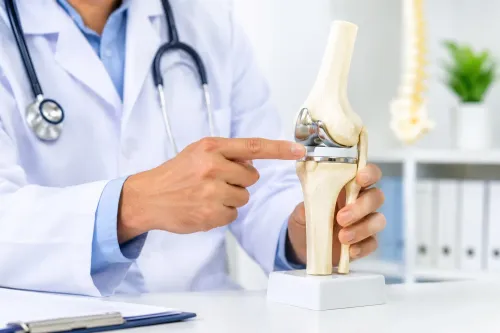
A partial replacement suits a carefully selected knee; a total replacement suits damage that is not confined to one area. Age or an X-ray label alone cannot decide the operation. Your pain pattern, examination, ligament stability, deformity, leg alignment and movement goals matter more.
| Option | What it replaces | When it fits |
|---|---|---|
| Partial knee replacement | One damaged compartment | Arthritis confined to one compartment, with preserved ligaments, correctable alignment and suitable examination findings |
| Total knee replacement | The worn surfaces across the knee | Damage in multiple compartments, fixed deformity, ligament problems or arthritis that a partial implant cannot address |
Partial replacement can preserve more of your natural knee, but damage elsewhere can cause failure or continuing pain. Total replacement offers broader treatment for severe disease, but it does not promise normal bending, unlimited activity or pain from another source.
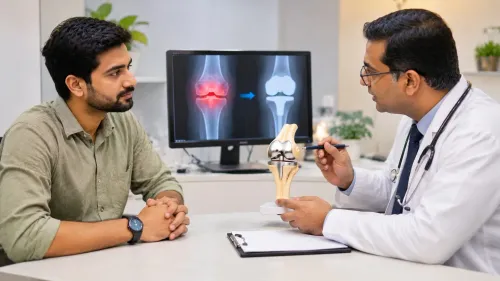
Use this checklist when assessing a knee replacement surgeon Dhanori:
- Ask how often the surgeon performs knee arthroplasty and which option fits your examination.
- Confirm that the hospital provides anaesthesia, imaging, emergency care and treatment for deep infection.
- Request a plain explanation of the implant, expected limits, likely complications and revision options.
- Ask who manages stiffness, instability, blood clots or persistent pain if they develop.
- Get a written rehabilitation pathway covering physiotherapy, walking aids and follow-up.
A consultation with DR. DEEPAK MUNDE ORTHOPAEDIC SURGEON 08048032510 in Dhanori can help connect these questions to your examination and goals; the location itself is not proof of quality.
Related service
Knee Replacement Surgeon In Dhanori,Pune Knee Replacement Surgeon In Dhanori,Pune Dr Deepak Munde is A Reliable and Best Knee Replacement Surgeon in Dhanori and Best Knee Replacement Surgeon in Dhanori PUNE. View service → |
What does knee replacement recovery in Pune look like?
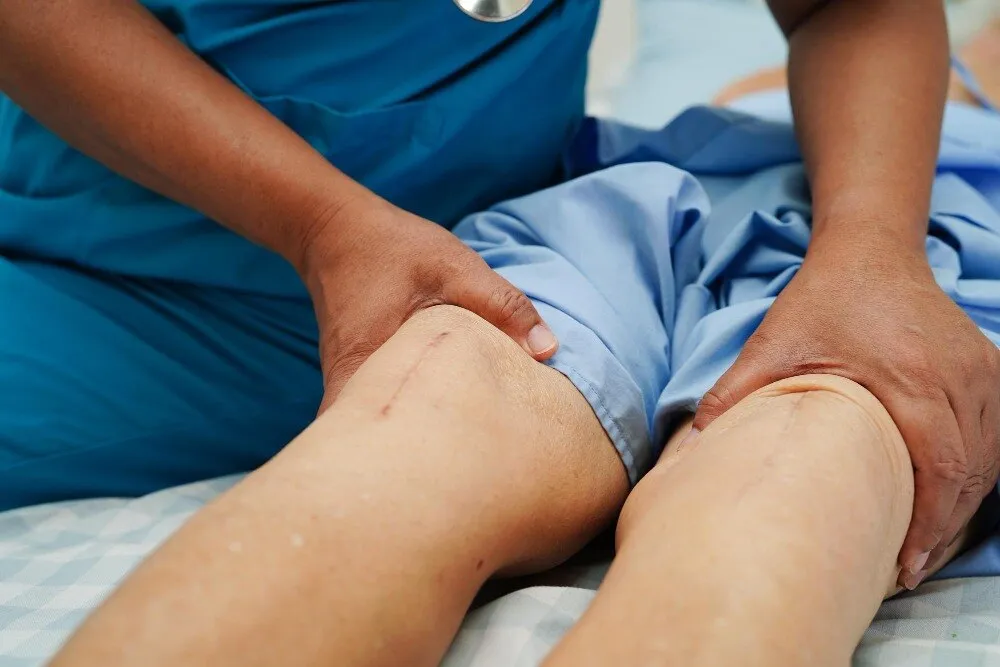
Discharge after one to three days is common, but it does not mean full independence. In the first days, you will walk short distances with a frame or crutches, practise stairs with the physiotherapist and manage swelling, bruising and a dressing.
Follow the wound-care instructions, keep medication available and attend physiotherapy follow-up in Dhanori or elsewhere in Pune.
Knee replacement recovery in Pune is easier when you arrange these needs before admission:
- Transport home, because you may not walk or travel comfortably alone.
- A relative or carer for meals, medicines, washing and transfers during the early days.
- A clear route through the home, with loose rugs removed and frequently used items within reach.
- Bathroom safety, including a raised toilet seat, grab rails and a non-slip mat.
- A stable chair with arms; low sofas make standing harder.
Your physiotherapist will increase walking distance and strengthening exercises as pain, swelling and control improve. You may move from a frame or crutches to a cane when you can walk steadily without leaning or limping.
Drive only after medical clearance and when you can sit comfortably, control the vehicle and brake hard in an emergency without hesitation.
Desk work depends on pain, concentration, transport and your ability to sit and move safely; some people return around a few weeks, while others need longer. Many normal activities improve around six weeks, but strength, flexibility and confidence can continue improving for up to a year.
What work is required after surgery, and how should progress be judged?
Discharge is the start of the workload, not the end of it. During knee replacement recovery in Pune, complete the prescribed exercises, attend physiotherapy, practise safe transfers from bed, toilet and chair, and use your frame or crutches until you are steady.
Control swelling with the methods your surgical team recommends, such as elevation, ankle pumps and approved cold therapy.
- Increase walking distance gradually, adding a little at a time rather than testing the knee with a long outing.
- Keep pathways clear, remove loose rugs, use handrails and install bathroom supports to reduce falls.
- Take prescribed clot prevention and pain medicines as directed; do not change doses without advice.
- Arrange transport and help with shopping, bathing and stairs until transfers and walking are reliable.
- Contact your surgical team urgently for wound redness that spreads, increasing warmth, pus, fever, wound opening or worsening pain.
- Seek emergency help for new calf swelling or pain, sudden breathlessness, chest pain or rapidly worsening instability.
Judge progress by function, not by an X-ray or one knee-bending number. Track pain, walking distance, stair ability, sleep and independence: walking around Dhanori, shopping or working with less effort shows the benefits of knee replacement in Dhanori.
Implants have limits; high-impact loading is not guaranteed, complications can occur, and loosening or wear may eventually require revision surgery.
Frequently asked questions
Which daily movements can knee replacement improve?
Knee replacement can make walking, standing from a chair, using stairs, getting in and out of a car, shopping and personal-care tasks easier by reducing arthritis pain and improving joint function.
When is knee replacement surgery reasonable?
Surgery becomes reasonable when persistent knee pain and stiffness limit sleep, work, walking or personal care despite appropriate nonsurgical treatment. It is premature when symptoms remain manageable and conservative care still supports daily activities.
Would total or partial knee replacement fit my movement goals?
Partial knee replacement fits damage limited to one compartment when the remaining compartments, ligaments and knee movement are suitable. Total replacement fits arthritis affecting multiple compartments or a knee with broader structural damage.
What does knee replacement recovery in Pune involve?
Recovery involves early walking, prescribed exercises, wound care, pain management and gradually increasing daily activity. Progress depends on strength, balance, knee movement, pain and the ability to perform practical tasks.
Keywords