Deciding on joint replacement involves more than reading an X-ray or choosing an implant brand. You need to understand the consultation, the tests and medical preparation, the operation itself, discharge criteria and the rehabilitation milestones that follow.
Key takeaways
- Bring pain history, medication details and previous scans to your first consultation.
- Choose surgery based on symptoms, examination, imaging and overall health—not an X-ray alone.
- Plan home support, walking aids and physiotherapy before leaving hospital.
- Ask about surgical experience, implant choice, risks, costs and follow-up appointments.
What happens at the first joint replacement consultation?
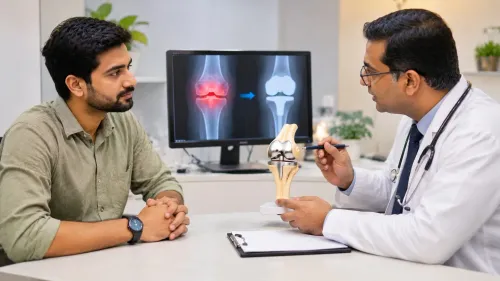
The first joint replacement consultation connects your pain, daily function, examination and previous treatment before surgery is recommended. A joint replacement consultation in Pune should not end with an X-ray-based decision.
1. Describe the pain clearly: when it began, where it hurts, whether it wakes you, and how it affects walking, stairs, work and daily tasks. Explain which treatments you have already tried and what relief they provided.
2. Bring X-rays, MRI or CT scans, blood-test reports, a current medication list, allergy history and previous operation notes. Standing or weight-bearing radiographs are important for many knee and hip assessments. MRI is not routinely needed for straightforward end-stage knee osteoarthritis.
3. Expect an examination of alignment, swelling, tenderness, movement, muscle strength and joint stability. The surgeon will also watch you walk because a limp or weakness can be invisible on an examination table.
4. The surgeon compares the images with your symptoms rather than treating the X-ray alone. Replacement becomes reasonable when pain and disability remain unacceptable despite activity modification, weight management where relevant, physiotherapy, strengthening, safe pain or anti-inflammatory medicines, and sometimes injections.
5. Pain severity, loss of function, imaging and overall health guide the decision. Manageable symptoms, pain from another condition, untreated infection or uncontrolled illness can make surgery the wrong next step.
Ask for a second opinion if the proposed operation does not match your symptoms or examination, including when researching how joint replacement for works in Dhanori.
Which operation and preparation fit your condition?
Choose the least extensive procedure that matches the damaged surfaces, ligament function, symptoms and medical fitness.
| Option | What it does | When it fits |
|---|---|---|
| Total replacement | Resurfaces all major damaged joint surfaces | Arthritis affects several compartments or the whole joint |
| Partial knee replacement | Treats one knee compartment while preserving suitable surfaces and ligaments | Disease is limited to one compartment |
| Resurfacing | Replaces the damaged surface while preserving more bone | Selected patients with suitable bone, anatomy and activity goals |
| Arthroscopy | Uses a camera and small instruments without replacing the joint | Particular cartilage, meniscus, loose-body or ligament problems |
Replacement is the wrong next step when pain comes from another condition, symptoms remain manageable, or further physiotherapy, medication or activity modification could help. An implant does not restore a normal biological joint or guarantee that every symptom will disappear.
Before elective surgery, address untreated dental, skin or urinary infection, fever, anaemia, uncontrolled diabetes, high blood pressure or another unstable illness. Expect medical clearance, blood tests, diabetes and blood-pressure review, an anaesthesia assessment and precise medication instructions. Do not stop blood thinners, diabetes medicines or supplements without directions from your treating team.
Planning the joint replacement process in Dhanori also means confirming:
- Total or partial procedure and implant plan
- Anaesthesia, expected stay and emergency contact
- Physiotherapy arrangements and follow-up schedule
- Consent details and infection and blood-clot prevention
Ask what happens if pain or stiffness persists.
What happens during the operation and hospital stay?
1. Anaesthesia comes first. Hip and knee replacement can use spinal or general anaesthesia, with a local nerve block or another regional pain-control technique added when appropriate. The anaesthesia team monitors you throughout the procedure.
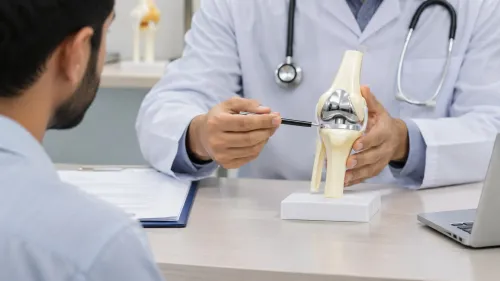
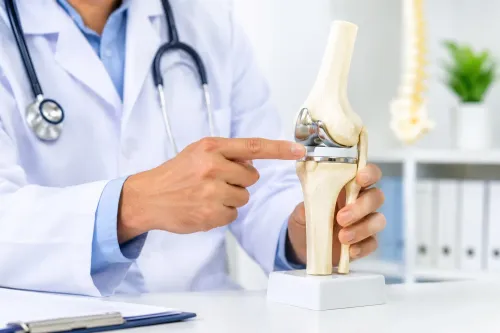
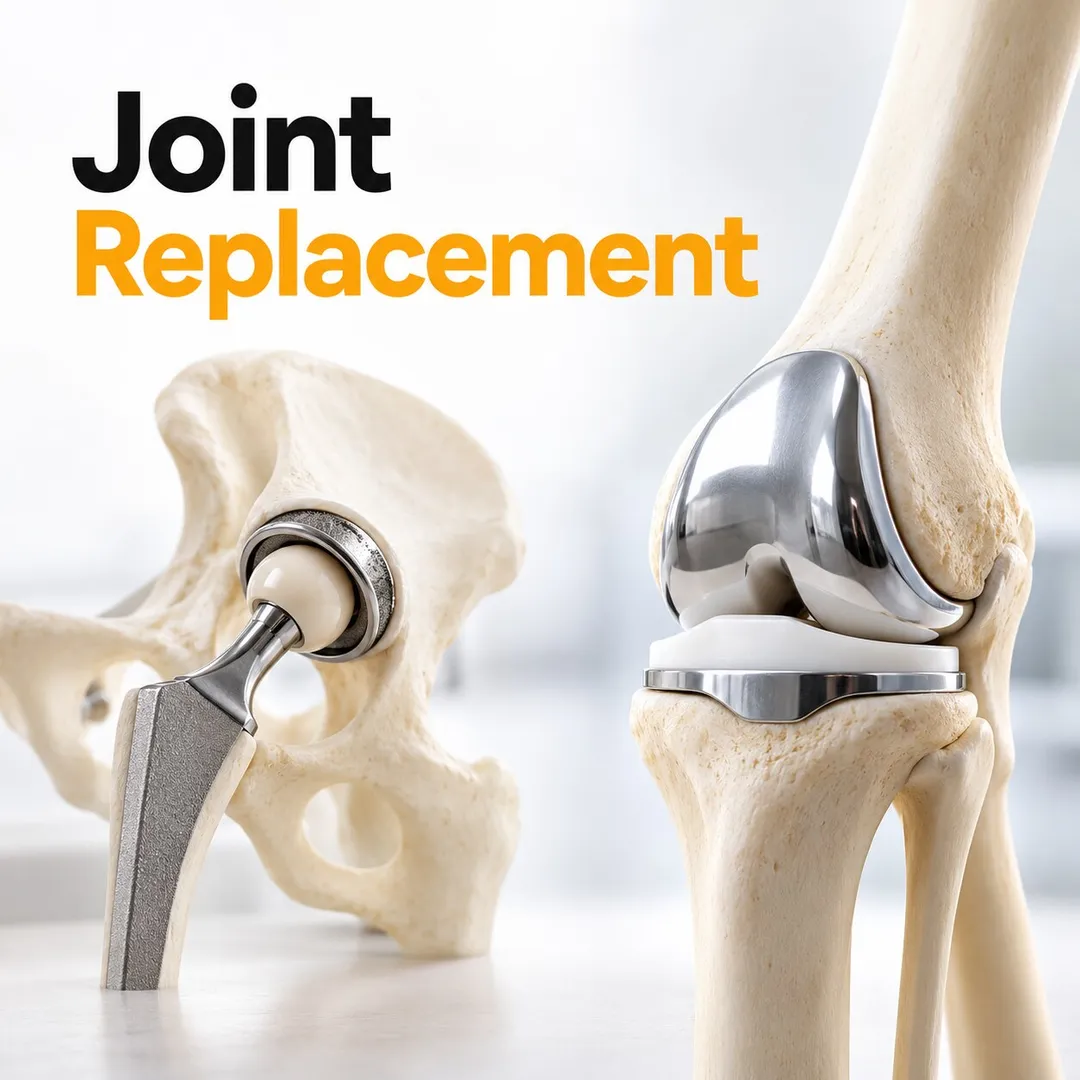
2. In total knee replacement, the surgeon removes the damaged joint surfaces rather than the entire joint. The ends of the femur and tibia are cut and fitted with metal components, with a plastic spacer between them; the underside of the kneecap is resurfaced when indicated.
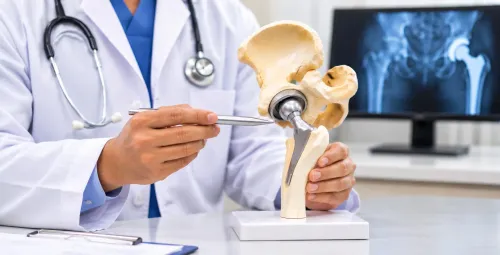
3. In hip replacement, the damaged femoral head is removed and replaced with a prosthetic component. The socket receives a matching prosthetic component. Fixation may be cemented or uncemented, and bearing surfaces may use metal, plastic or ceramic, depending on your anatomy, activity and surgical plan.
4. After checking movement and stability, the surgeon closes the wound. Staff monitor pain, blood pressure, circulation, leg movement, bleeding and the incision. Early mobilisation is standard: once medically safe, you will sit, stand and walk with assistance rather than remain in bed.
5. Discharge after an uncomplicated primary replacement depends on controlled pain, stable medical status, safe transfers, walking with the prescribed aid and a suitable home plan—not simply the number of hours since surgery.
Before admission, confirm whether your joint replacement process Dhanori hospital offers is total or partial, the implant plan, anaesthesia, expected stay, physiotherapy arrangements, emergency contact and follow-up schedule.
What does rehabilitation involve after joint replacement?
Routine activities often become easier within 6–12 weeks, but strength, swelling, confidence and final function can continue improving for 6–12 months. For joint surgery recovery, Dhanori patients need a staged plan rather than a fixed promise of walking normally by a particular date.
After knee replacement, early physiotherapy targets:
- Controlling swelling and pain
- Activating the quadriceps
- Walking safely with the prescribed aid
- Regaining full knee extension
- Gradually improving knee flexion
Progress toward about 90 degrees of flexion is a common early goal. Do not force a swollen knee; aggressive bending can increase pain and stiffness. A walker or crutches usually come first, followed by a cane and then unaided walking when your gait is safe.
After hip replacement, precautions depend on the surgical approach and your surgeon’s protocol. Temporary restrictions on deep hip flexion, crossing your legs or twisting may apply. Follow your own instructions, because another patient’s routine may be unsafe for you.
Pain, bruising, swelling and fatigue are common early. Contact the surgical team urgently for:
- Worsening pain instead of gradual improvement
- Fever, increasing redness, wound drainage or wound opening
- New calf swelling or calf pain
- Chest pain or breathlessness
- Sudden weakness, confusion, speech trouble or other neurological symptoms
These signs can indicate infection, a blood clot, pulmonary embolism or another complication. Do not wait for the next routine appointment.
How should you choose your surgeon and plan care in Pune?
Do not choose a surgeon by implant brand or clinic distance alone. For a joint replacement specialist near Yerwada, Dhanori or elsewhere in Pune, compare the reasoning, safety plan and follow-up support.
| Option | What it treats | Question to ask |
|---|---|---|
| Total replacement | Most major joint surfaces are damaged | Why is replacing the whole joint better than preserving part of it? |
| Partial replacement | Disease is limited to one knee compartment | Are my ligaments and remaining joint surfaces suitable? |
| Resurfacing | Selected damaged surfaces are covered while more bone remains | Does my bone quality, age and activity make this appropriate? |
During your joint replacement consultation in Pune, ask why surgery is needed now and which options remain: physiotherapy, strengthening, activity modification, weight management, safe pain medicines or injections. Ask which fixation method and bearing surface are planned, how they match your expected activity, and how familiar the surgeon is with that implant system.
A brand name does not prove a better outcome.
Use this checklist before admission:
- Ask for the infection and blood-clot prevention protocol.
- Confirm expected functional limits, pain-control methods and physiotherapy location.
- Ask when reviews occur and what happens if pain or stiffness persists.
- Confirm the procedure, anaesthesia, expected stay and emergency contact.
- Arrange transport, home assistance and a clear, obstacle-free walking route.
DR. DEEPAK MUNDE ORTHOPAEDIC SURGEON 08048032510 is one local option for discussing these decisions in Dhanori; choose after reviewing symptoms, examination, imaging, medical fitness and goals. Replacement reduces disability from joint damage but does not restore a normal biological joint or guarantee symptom-free movement. Later loosening or wear requires more complex revision surgery.
Related services
Joint Replacement Surgeon In Dhanori,Pune Joint Replacement Surgeon In Dhanori,Pune Dr Deepak Munde is A Reliable and Best Joint Replacement Surgeon in Dhanori and Best Joint Replacement Surgeon in Dhanori PUNE. View service → |
Hip Joint Replacement Specialist In Dhanori Pune Hip Joint Replacement Specialist In Dhanori Pune Dr Deepak Munde is A Reliable and Best Hip Joint Replacement Surgeon in Dhanori and Best Hip Joint Replacement Surgeon in Dhanori PUNE. View service → |
Frequently asked questions
What happens at the first joint replacement consultation?
The surgeon reviews your pain, mobility, daily limitations, previous treatment, medical history and imaging, then examines the affected joint before discussing whether replacement is appropriate.
How are the operation and preparation chosen?
The procedure, implant approach and preparation depend on the affected joint, damage pattern, symptoms, activity goals, medical conditions and examination findings.
What happens during the operation and hospital stay?
The team provides anaesthesia, replaces the damaged joint surfaces, monitors you after surgery, manages pain and starts safe movement before discharge.
What does rehabilitation involve after joint replacement?
Recovery includes wound care, prescribed exercises, walking practice, gradual strengthening and follow-up reviews, with progress shaped by the joint replaced and your health.
How should you choose a joint replacement surgeon in Pune?
Ask about relevant surgical experience, hospital facilities, implant options, complication management, rehabilitation planning, follow-up access and the full expected cost.
Related services
Knee Replacement Surgeon In Dhanori,Pune Knee Replacement Surgeon In Dhanori,Pune Dr Deepak Munde is A Reliable and Best Knee Replacement Surgeon in Dhanori and Best Knee Replacement Surgeon in Dhanori PUNE. View service → |
Arthroplasty Surgeon In Dhanori,Pune Arthroplasty Surgeon In Dhanori,Pune Dr Deepakmunde is A Reliable and Best Arthroplasty Surgeon in Dhanori and Pune. View service → |
Keywords