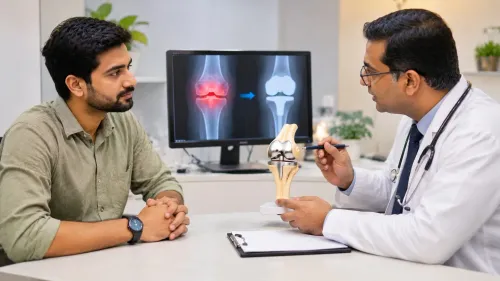
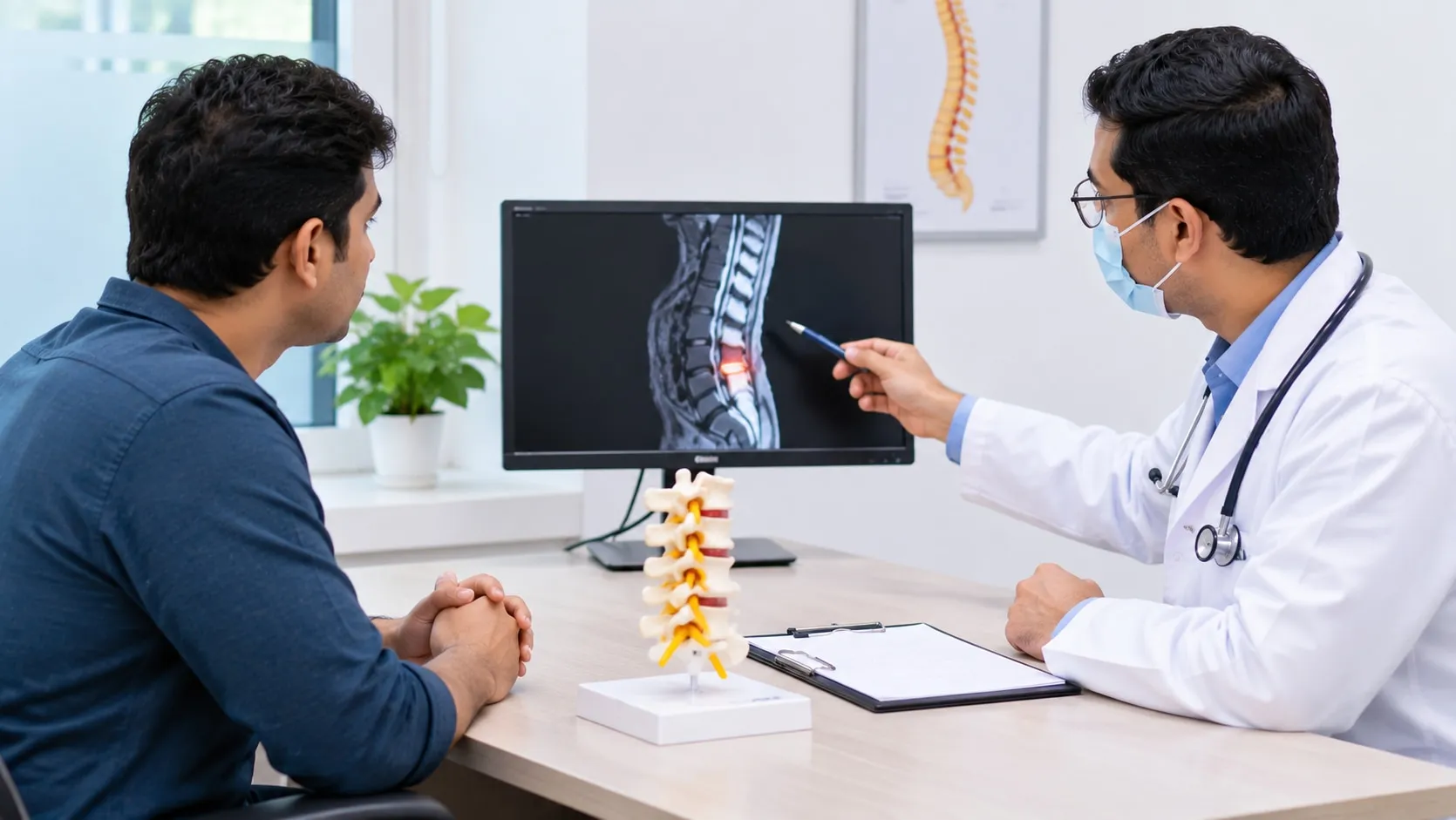
Back or neck pain does not automatically mean you need surgery, but persistent pain, radiating symptoms, weakness, walking changes, or loss of bladder control require different levels of attention. By the end, you will be able to separate symptoms suitable for a planned spine assessment from signs that need emergency care, and understand how examination and imaging guide the decision.
Key takeaways
- Book review for persistent pain, repeated disabling episodes, or failed non-surgical care.
- Seek urgent help for new bladder or bowel loss, saddle numbness, or rapidly worsening weakness.
- Arrange specialist review for radiating pain, numbness, weakness, walking trouble, or poor hand coordination.
- Imaging depends on examination findings, symptom duration, red flags, and planned treatment.
Which spine symptoms justify a planned surgeon assessment?
Low-back or neck pain lasting beyond several weeks, repeated disabling episodes, or failure to regain normal activity after appropriate non-surgical care justifies a planned spine surgeon assessment. Arrange review sooner if pain travels down an arm or leg, or if you develop numbness, tingling, weakness, difficulty walking, balance changes, or loss of hand coordination.
A muscle strain usually causes local, movement-related soreness. A pinched nerve produces pain along a band or limb distribution; numbness may follow a dermatome, reflexes can change, and weakness affects specific movements such as lifting the foot or gripping objects.
| Symptom pattern | Usual next step | Why it matters |
|---|---|---|
| Stable tingling without weakness | History and neurological examination | The distribution, sensation, reflexes, and strength guide further testing |
| Pain radiating into an arm or leg | Planned specialist review if persistent or disabling | Ongoing nerve compression needs correlation with examination and, when useful, imaging |
| Foot drop, progressive weakness, or rapidly worsening numbness | Faster clinical assessment | Nerve function can deteriorate and delay can leave lasting disability |
| Neck pain with hand clumsiness, imbalance, or worsening gait | Prompt spine assessment | These findings can indicate spinal-cord compression rather than simple neck strain |
Continue prescribed activity modification, physiotherapy, and suitable pain treatment when advised, but arrange reassessment when symptoms fail to improve or keep returning. Searching for “pinched nerve specialist in pune” or “spine problems needing surgeon assessment dhanori” should not delay urgent care for rapidly worsening neurological symptoms.
When is spine pain an emergency rather than a routine appointment?
New urinary retention, loss of bladder or bowel control, saddle-area numbness, or severe and progressive weakness in both legs require emergency assessment. These symptoms can indicate cauda equina syndrome, where compressed nerves risk permanent bladder, bowel, sexual, or leg dysfunction.
Go to an emergency department for urgent MRI and specialist review; do not wait for a routine appointment or search for a spinal pressure surgeon near yerwada.
After a road accident or fall, seek prompt assessment for severe back or neck pain, suspected vertebral fracture, or any new weakness, numbness, or difficulty walking. Even a minor fall can fracture an osteoporotic vertebra, particularly after long-term steroid use. A normal-looking X-ray does not always exclude the injury; CT or MRI may be necessary.
Treat these warning combinations as urgent:
- Fever with severe back pain, recent bloodstream infection, immunosuppression, or intravenous drug use: possible spinal infection or epidural abscess.
- Night pain, unexplained weight loss, rapidly worsening pain, or a cancer history: possible metastatic spinal compression.
- New weakness, sensory change, or bladder symptoms in someone with cancer: seek emergency care immediately.
- Progressive weakness, loss of hand dexterity, gait imbalance, or brisk reflexes with neck pain: possible cervical spinal-cord compression.
Emergency assessment takes priority over a local spine consultation whenever neurological function is changing, infection is possible, or cancer-related compression is suspected.
Which spine conditions may need specialist review?
Specialist review is useful when a spine diagnosis matches persistent, disabling symptoms or objective neurological findings. Cervical or lumbar radiculopathy may produce radiating arm or leg pain, numbness, altered sensation, reflex differences, or weakness.
| Condition | Findings that strengthen the case for review | Key decision |
|---|---|---|
| Radiculopathy from a herniated or damaged disc | Persistent disabling sciatica despite appropriate non-operative care, or progressive weakness with matching MRI compression | Consider whether decompression or discectomy benefits the affected nerve |
| Spinal stenosis | Leg pain, numbness, or weakness that limits walking and continues after non-surgical treatment | Assess the degree of functional loss; scan-only narrowing is not enough |
| Spondylolisthesis or spinal deformity | Mechanical pain, worsening alignment, instability, or neurological symptoms | Evaluate stability, deformity, and nerve involvement |
| Fracture, infection, or spinal-cord compression | Severe pain, fever, cancer risk, trauma, gait change, hand clumsiness, brisk reflexes, or progressive weakness | Determine the cause and urgency; cord compression needs prompt assessment |
Most acute sciatica improves without surgery. A discectomy treats selected compressive leg symptoms, not nonspecific low-back pain, so the scan must match the pain pattern and examination. Progressive weakness, loss of hand dexterity, or balance problems with neck symptoms deserves faster review.
If you search for damaged disc consultation dhanori, focus on the clinician’s assessment of symptoms, neurological function, imaging, and failed treatments rather than the scan label alone. A specialist also helps distinguish a treatable compression from an incidental disc bulge.
What happens during the assessment, and when do you need imaging?
A spine specialist first matches your symptoms to the examination before recommending treatment. The assessment asks when pain began, how long it has lasted, where it travels, what triggers it, how it affects work, sleep, walking or hand use, and whether previous injuries, fever, cancer, medicines, physiotherapy or other non-surgical care changed it.
1. The neurological examination tests muscle strength, sensation, reflexes, gait, balance, straight-leg raise and hand dexterity. Brisk reflexes, worsening weakness, poor balance or clumsy hands can indicate spinal-cord involvement rather than uncomplicated neck pain.
2. Standing X-rays show spinal alignment, deformity and movement-related instability. They are useful for problems such as spondylolisthesis, curvature or suspected structural change.
3. MRI shows discs, nerve roots, the spinal cord, infection and other soft tissues. CT provides sharper bone detail and helps assess complex fractures. Order imaging when its result could change treatment, not automatically for uncomplicated back pain.
A disc bulge, disc dehydration or spinal stenosis on MRI does not prove that finding causes your pain; these changes are common without symptoms. The scan must match the pain distribution, examination findings and symptom duration before surgery is considered.
Searching for a spine condition doctor dhanori or a damaged disc consultation dhanori should prompt you to ask how the proposed treatment connects your symptoms to objective findings. A spinal pressure surgeon near yerwada should explain whether imaging supports observation, further non-surgical care or an operation.
How should you choose the next step for a local spine assessment?
Choose the next step by urgency, not by the clinic’s location. Go to an emergency department for cauda equina symptoms, rapidly worsening weakness, suspected fracture with a new neurological change, severe back pain with fever, or possible cancer-related spinal compression.
| Option | What to do | When it applies |
|---|---|---|
| Emergency department | Seek urgent examination and imaging | New urinary retention, bladder or bowel loss, saddle numbness, rapidly worsening leg weakness, neurological change after trauma, fever with severe pain, or cancer-related weakness or numbness |
| Planned spine consultation | Arrange a clinical assessment | Pain lasting beyond several weeks, recurring disabling episodes, declining walking or hand function, or symptoms that persist despite appropriate non-surgical care |
| Local assessment | Book a nearby orthopaedic spine review | Symptoms are stable and no emergency warning sign is present |
Take these items to a planned appointment:
- A medication list, including painkillers, steroids, blood thinners, and supplements
- Previous X-rays, MRI or CT reports, and the image discs or links
- The date symptoms began and any fall, accident, fever, or cancer history
- A clear description of where pain, numbness, tingling, or weakness travels
For someone searching “spine condition doctor dhanori” or “spinal pressure surgeon near yerwada,” DR. DEEPAK MUNDE ORTHOPAEDIC SURGEON 08048032510 can assess stable symptoms and help interpret examination and imaging findings. Do not delay emergency-department care for a local appointment when red flags are present.
Related service
Spine Surgeon In Dhanori,Pune Dr Deepak Munde is A Reliable and Best Spine Surgeon in Dhanori and Best Spine Specialist in Dhanori PUNE. View service → |
Frequently asked questions
Which spine symptoms justify a planned surgeon assessment?
Arrange a planned assessment when neck or low-back pain lasts beyond several weeks, disabling episodes keep returning, or appropriate non-surgical care has not restored normal activity. Book sooner for pain travelling into an arm or leg, numbness, tingling, weakness, difficulty walking, balance changes, or loss of hand coordination.
When is spine pain an emergency?
Seek urgent medical care for new loss of bladder or bowel control, numbness around the inner thighs or genitals, rapidly worsening leg or arm weakness, inability to walk, or severe spine pain after major trauma. Fever, unexplained weight loss, a history of cancer, or severe pain with feeling acutely unwell also needs prompt assessment.
Which spine conditions may need specialist review?
Specialist review can help assess a slipped or damaged disc, pinched nerve, spinal stenosis, vertebral fracture, spinal deformity, infection, tumour, or persistent pain that has not improved with non-surgical treatment. The examination determines whether the symptoms fit one of these conditions.
What happens during a spine surgeon assessment?
The clinician reviews your pain pattern, duration, injuries, medical history, medicines, previous treatment, and effect on walking, work, sleep, or hand use. They examine strength, sensation, reflexes, gait, balance, and spinal movement before deciding whether tests or treatment changes are needed.
When do you need spine imaging?
Imaging is considered when examination findings suggest nerve or spinal cord involvement, symptoms persist despite appropriate care, trauma raises concern for fracture, or red flags point to infection, cancer, or another serious cause. MRI shows discs, nerves, and the spinal cord; X-rays show alignment and bone injury; CT gives detailed bone images.
Keywords