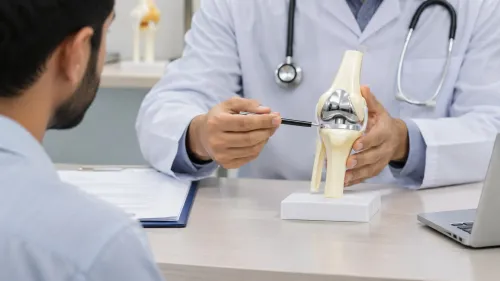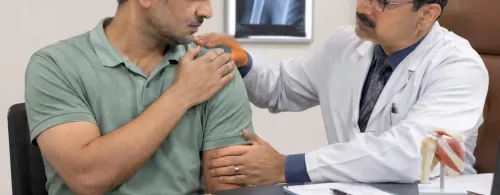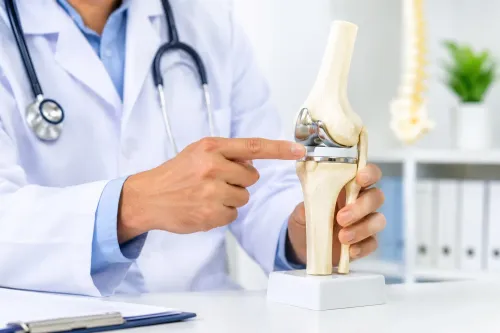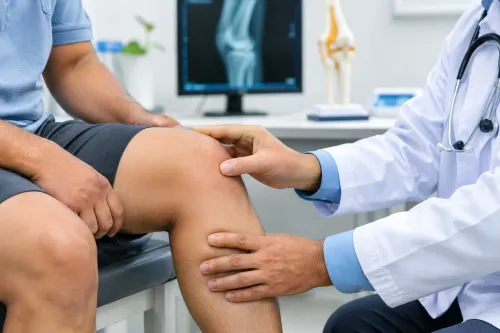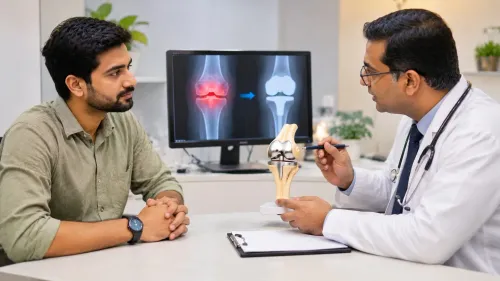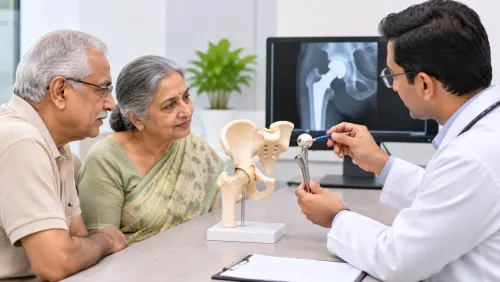
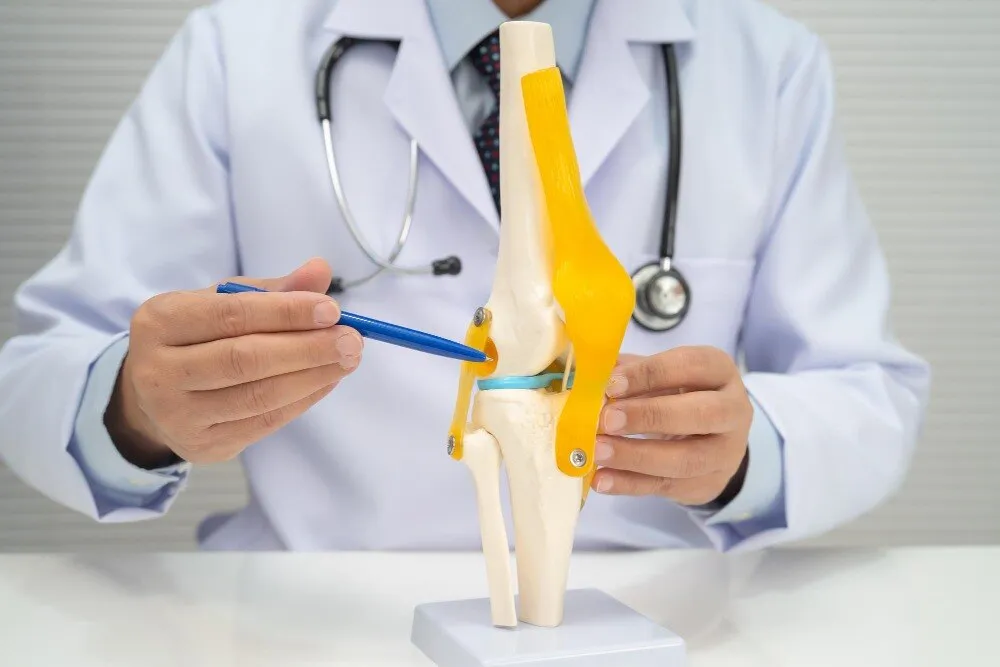
A damaged joint can cause pain through worn or deformed surfaces, but an operation is not automatically the best answer. By comparing replacement options, eligibility factors, alternatives, recovery demands and surgical risks, you can decide what to discuss at a qualified orthopaedic consultation in Dhanori or elsewhere in Pune.
Key takeaways
- Arthroplasty can reduce joint pain and improve walking, stairs and self-care.
- The operation depends on whether damage requires resurfacing, partial replacement or total replacement.
- Assessment includes symptoms, movement, alignment, imaging and fitness for anaesthesia.
- Ask about implant choice, expected mobility, hospital stay, rehabilitation and warning signs.
Which problems can arthroplasty improve?
Arthroplasty removes, resurfaces or replaces damaged joint surfaces with implants. For patients considering the benefits of arthroplasty for damaged joints in Dhanori, the practical goal is less bone-on-bone pain and better function: walking, climbing stairs, reaching, dressing, bathing and other self-care tasks may become easier. Surgery can also correct some loss of alignment or instability.
Discussion is reasonable when persistent symptoms remain disabling despite appropriate non-surgical care, including:
- Advanced osteoarthritis
- Rheumatoid arthritis
- Post-traumatic joint damage
- Avascular necrosis
- Severe fracture damage
- Deformity
- Failed previous joint surgery
| Problem | Possible improvement from arthroplasty |
|---|---|
| Painful joint surfaces | Less mechanical pain during movement |
| Stiffness and restricted motion | Easier walking, reaching or dressing |
| Poor alignment | A more functional load path through the joint |
| Instability | Greater support during standing and movement |
| Damaged hip, knee or shoulder | Better day-to-day independence |
The decision depends more on persistent pain, stiffness and reduced function than on an X-ray alone. Arthroplasty for damaged joints aims to improve quality of life, not produce a normal-looking X-ray or unlimited athletic performance.
A total knee replacement can still leave kneeling difficulty, clicking, stiffness or altered skin sensation near the scar. It replaces a damaged surface; it does not recreate a normal knee.
Which operation matches the pattern of joint damage?
The operation must match the damaged surfaces, ligaments, bone and joint mechanics—not just the pain score.
| Option | What it changes | When it applies |
|---|---|---|
| Total replacement | Replaces the damaged surfaces on both sides of the joint | Advanced damage affecting the knee, hip or shoulder |
| Partial knee replacement | Replaces one knee compartment and preserves the others | One-compartment arthritis with suitable cartilage, alignment and functioning ligaments |
| Resurfacing | Covers a damaged surface while preserving more of your bone | Selected joints and patients with suitable bone, anatomy and implant indications |
These procedures are not interchangeable. A knee replacement must address knee compartments and alignment; a hip replacement must restore the ball-and-socket relationship; shoulder surgery depends heavily on the rotator cuff and shoulder mechanics. An anatomic total shoulder replacement usually requires a functioning rotator cuff.
A reverse shoulder replacement switches the mechanics so the deltoid can elevate the arm, making it a choice for selected cuff-tear arthropathy or complex fractures.
Medicines, injections, physiotherapy, activity changes, observation or joint-preserving treatment remain better choices when symptoms are manageable or the joint can still be protected. Arthroscopy is not a replacement for established knee osteoarthritis; it can address a separate problem, such as a truly locked knee.
For patients comparing arthroplasty benefits in Pune, arthroplasty for damaged joints should be considered only after matching the procedure to the specific joint and damage pattern. Resurfacing also does not suit every hip, knee or shoulder.
How is eligibility assessed before surgery?
Eligibility requires more than an X-ray: the assessment must show that joint damage explains disabling symptoms and that surgery offers more benefit than continued non-operative care.
1. The surgeon reviews pain severity, symptom duration, walking, stair climbing, dressing and other self-care limits, previous medicines, injections, physiotherapy or other treatment, and your goals. If pain is inadequately assessed, replacement is premature.
2. A joint-specific examination checks movement, alignment, stability, tenderness, muscle strength, nerve function and walking pattern. For relevant hip and knee problems, standing or weight-bearing X-rays show joint-space loss and alignment under load. Imaging supports the decision; it does not determine the operation by itself.
3. The team reviews every medication, orders blood tests such as a full blood count and glucose testing, and assesses bone quality, infection risk and fitness for anaesthesia. Ask how these findings affect implant choice and timing.
Elective surgery can be delayed by smoking, uncontrolled diabetes, obesity, anaemia, an active dental or skin infection, or poorly controlled heart or lung disease. Treating these problems first reduces avoidable complications.
Replacement is the wrong first choice when symptoms remain manageable, the pain source is uncertain, an active infection exists, or joint-preserving care still has a realistic chance of helping. If you searched joint surgery Dhanori, expect this full assessment rather than a recommendation based on a scan alone.
What should you expect from the operation and recovery?
Recovery is treatment, not an instant cure. Early mobilisation, prescribed exercises, wound checks and venous-thromboembolism prevention help protect your result; pain, swelling and weakness can persist while tissues heal. Anyone weighing arthroplasty benefits in Pune should expect progress over weeks to months, not an immediate return to normal.
| Joint | Typical recovery expectations | Important risks or limits |
|---|---|---|
| Hip arthroplasty | Walking begins early; driving often takes several weeks, desk work a few weeks, and low-impact recreation several months. | Dislocation, infection, clots, leg-length difference, loosening, wear and later revision. |
| Knee arthroplasty | Bending and strength improve for months; driving and desk work often take several weeks, while kneeling and high-impact sport may remain limited. | Infection, clots, stiffness, persistent pain, instability, loosening or wear. |
| Shoulder arthroplasty | Sling use and guided exercises come first; driving, work and reaching activities resume on different schedules, with heavy lifting restricted. | Infection, stiffness, instability, fracture, nerve injury or failure of the implant. |
| Spine surgery or artificial disc | Recovery depends on the cervical or lumbar indication; it is not a joint-replacement timetable. | Artificial-disc procedures have separate selection criteria and risks, so hip, knee or shoulder evidence does not transfer automatically. |
For arthroplasty for damaged joints, ask:
- What implant type and fixation will you use?
- What function and activity limits are realistic?
- Which anaesthesia, infection and clot-prevention plans apply?
- Which warning signs need urgent review?
- Who directs rehabilitation, and what is the plan if loosening or infection occurs?
Every implant has a finite service life shaped by design, fixation, activity, body weight, age and bone quality.
How can you choose a useful arthroplasty consultation in Dhanori?
Choose an arthroplasty specialist near me by the completeness of the care pathway, not by distance from your home. A useful consultation links your symptoms, examination, X-rays, medical fitness, operation and recovery plan.
| Option | What it changes | Key question |
|---|---|---|
| Total replacement | Damaged surfaces on both sides of the joint | Is disease widespread enough to require this? |
| Partial replacement | One damaged knee compartment | Are the other surfaces, alignment and ligaments suitable? |
| Resurfacing | Covers a damaged surface while preserving more bone | Is this procedure appropriate for your joint and anatomy? |
| Non-operative care | Medicines, injections, physiotherapy or observation | Could these provide acceptable function without surgery? |
Take this checklist to the appointment:
- Ask what the X-rays and physical examination show, and whether they support total replacement, partial replacement, resurfacing or continued non-operative care.
- Ask which alternatives remain, including joint-preserving treatment or arthroscopy when a separate problem exists.
- Define realistic function: walking distance, stairs, sitting, reaching, driving, work, kneeling and sport.
- Ask how smoking, diabetes, weight, anaemia, infection and heart or lung disease will be optimised before anaesthesia.
- Confirm who provides physiotherapy, when exercises begin and how progress is monitored.
- Ask who handles urgent pain, fever, wound drainage or swelling after discharge, and how quickly you can be assessed.
- Ask what happens if the implant loosens, wears out or becomes infected, including access to revision surgery.
A patient seeking joint surgery Dhanori can discuss these points with DR. DEEPAK MUNDE ORTHOPAEDIC SURGEON 08048032510. Proximity helps only when pre-operative medical review, rehabilitation and follow-up are organised; compare the proposed procedure, benefits, risks and revision plan with your goals.
Related services
Arthroplasty Surgeon In Dhanori,Pune Arthroplasty Surgeon In Dhanori,Pune Dr Deepakmunde is A Reliable and Best Arthroplasty Surgeon in Dhanori and Pune. View service → |
Joint Replacement Surgeon In Dhanori,Pune Joint Replacement Surgeon In Dhanori,Pune Dr Deepak Munde is A Reliable and Best Joint Replacement Surgeon in Dhanori and Best Joint Replacement Surgeon in Dhanori PUNE. View service → |
Frequently asked questions
Which joint problems can arthroplasty improve?
Arthroplasty can improve pain and reduced function caused by damaged joint surfaces. It may also correct some loss of alignment or instability.
How is the right arthroplasty operation selected?
The choice depends on the pattern and extent of joint damage. Options include removing damaged surfaces, resurfacing them or replacing part or all of the joint.
How is eligibility for arthroplasty assessed?
Assessment considers your symptoms, daily limitations, joint movement, alignment, stability, imaging findings and overall fitness for surgery and anaesthesia.
What should you expect after arthroplasty?
Expect an operation followed by pain control, wound monitoring, movement exercises and rehabilitation. Recovery time and activity milestones depend on the joint and procedure.
Related services
Hip Joint Replacement Specialist In Dhanori Pune Hip Joint Replacement Specialist In Dhanori Pune Dr Deepak Munde is A Reliable and Best Hip Joint Replacement Surgeon in Dhanori and Best Hip Joint Replacement Surgeon in Dhanori PUNE. View service → |
Knee Replacement Surgeon In Dhanori,Pune Knee Replacement Surgeon In Dhanori,Pune Dr Deepak Munde is A Reliable and Best Knee Replacement Surgeon in Dhanori and Best Knee Replacement Surgeon in Dhanori PUNE. View service → |
Shoulder Surgery Specialist In Dhanori,Pune Shoulder Surgery Specialist In Dhanori,Pune Dr Deepak Munde is A Reliable and Best Shoulder Surgery Specialist in Dhanori and Best Shoulder Surgery Specialist in Dhanori PUNE. View service → |
Keywords