Walking less, standing for only a few minutes, or feeling unsteady can result from nerve compression, spinal instability, hip or knee disease, or a non-orthopaedic condition. By matching your symptoms and examination findings to the correct cause, you can identify when exercise-based care is enough, when spinal pressure treatment is appropriate, and what mobility gains surgery can realistically deliver.
Key takeaways
- Nerve compression can cause pain, numbness, weakness and shorter walking distances.
- MRI and neurological tests help identify where spinal pressure is affecting movement.
- Spine surgery aims to reduce nerve compression, not guarantee complete mobility recovery.
- Compare risks, alternatives, recovery time and rehabilitation before choosing a procedure.
Why spinal problems change the way you walk and move
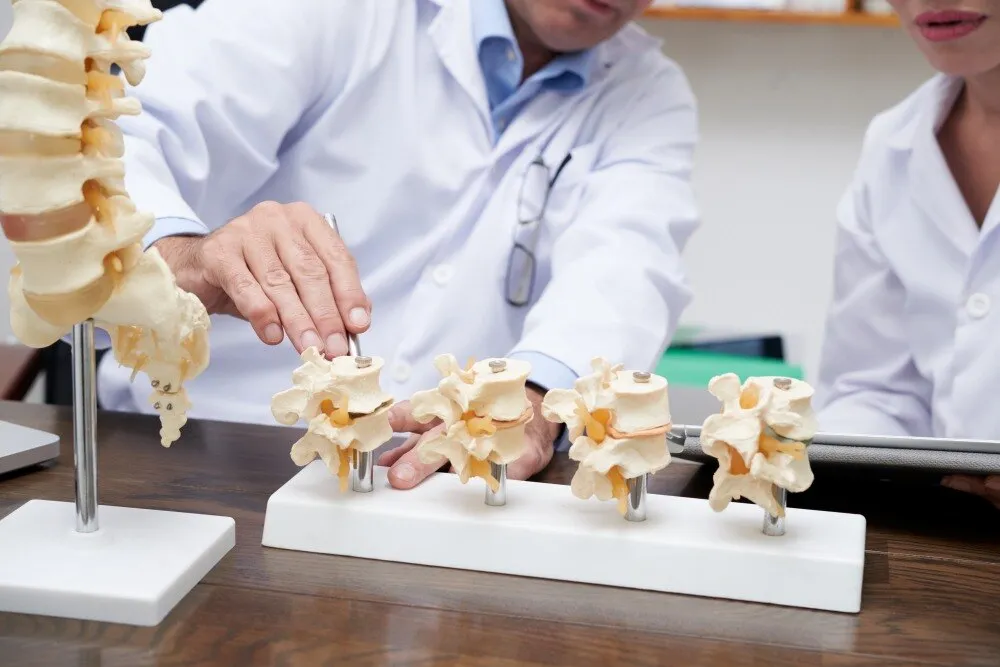
A narrowed lumbar canal can make walking and standing painful because compressed nerves produce leg pain, heaviness, numbness or weakness that worsens with distance. You may bend forward over a trolley or sit to get relief; lumbar disc herniation can instead cause sharp, radiating pain and weakness that makes bending, lifting or pushing off difficult.
- Spondylolisthesis can create instability, back pain and shortened steps.
- Spinal deformity can shift your posture, strain muscles and reduce endurance.
- Cervical spinal cord compression, called cervical myelopathy, can cause hand clumsiness, stiff or weak legs, imbalance and difficulty placing your feet safely.
Neck disease changes walking through the spinal cord, not usually through leg pain. Without treatment, progressive myelopathy can impair gait and hand function; a neurological examination helps identify this pattern.
Persistent walking difficulty is not automatically a spine problem. Hip or knee arthritis can limit distance and bending, peripheral neuropathy can reduce sensation in the feet, vascular claudication can cause exertional leg pain, and inner-ear or other balance disorders can cause unsteadiness. These conditions need different treatment.
Local searches for spine care dhanori should therefore begin with symptom history and examination, not an assumption that back pain requires surgery. Seek prompt assessment for new weakness, falls, loss of hand control or bladder and bowel changes.
How spinal pressure is diagnosed before treatment
Spinal pressure treatment starts with confirming that a nerve root or the spinal cord is actually causing your symptoms. Back pain alone does not prove compression, and an MRI finding does not justify surgery unless it matches your pain, weakness, numbness or walking limitation.
1. A clinical assessment checks your gait, balance, leg or arm strength, sensation, reflexes and painful movements. The clinician also asks about bladder or bowel changes, saddle numbness, fever, injury and unexplained weight loss. Progressive weakness or new bladder and bowel problems need urgent evaluation.
2. Imaging then locates the suspected pressure. An MRI can show a herniated disc, spinal stenosis, cord compression or nerve-root narrowing; X-rays can reveal alignment, instability or movement-related slippage. Hip arthritis, knee arthritis, peripheral neuropathy and circulation problems must also be considered when symptoms do not fit the scan.
3. Non-surgical care usually comes before an operation when there is no urgent neurological problem. Education, staying active, prescribed pain relief and exercise-based physiotherapy can improve function; selected patients may discuss an injection. Track walking distance, standing time, weakness and pain during this period.
4. Surgery becomes more reasonable when a matching compression causes progressive neurological loss or severe, disabling symptoms that persist despite appropriate care. Ask which level is being treated, what mobility improvement is realistic, why decompression or fusion is needed, and what rehabilitation involves.
A second opinion is sensible when the scan and symptoms disagree or fusion is proposed for pain alone.
In Dhanori, consultation, MRI, physiotherapy and hospital services may occur at different Pune locations. Coordination matters, but neurological findings and symptom-imaging agreement—not clinic location—determine the treatment plan.
Which mobility benefits can spine surgery provide?
Walking farther is the clearest mobility gain when lumbar spinal stenosis compresses nerve roots and causes leg pain, heaviness, numbness or weakness during standing and walking. Decompression removes bone or ligament pressing on the nerves, often improving walking distance and standing tolerance; it is less predictable for isolated low-back pain without leg symptoms.
| Procedure | When it can improve mobility | Main trade-offs |
|---|---|---|
| Decompression | Nerve-root compression from stenosis or a disc, or spinal-cord compression causing cervical myelopathy, hand clumsiness, imbalance or stiff legs | Relief depends on whether nerve damage is reversible; symptoms can persist, and further narrowing can develop |
| Fusion | Painful instability from spondylolisthesis, deformity or a fracture, especially when movement at one level worsens nerve symptoms | Longer recovery, reduced movement at the fused level, implant-related risks and added stress on nearby levels |
Cervical decompression can stabilize or improve balance, leg control and hand function when cord compression causes myelopathy. Fusion adds support when decompression alone would leave an unstable spine, but it is not a dependable solution for pain alone when scans and symptoms do not match.
These spine surgery mobility benefits depend on the diagnosis, nerve condition and rehabilitation plan.
After either operation, mobility returns through graded walking and physiotherapy, not immediate unrestricted activity. Smoking, poorly controlled diabetes and weak pre-operative conditioning can slow recovery. The benefits of spine surgery for mobility in Dhanori should be judged against non-surgical care, the expected walking gain and specific lifting, bending and driving restrictions.
How to compare a spine procedure before choosing it
Choose the operation only when your symptom pattern, neurological examination and imaging point to the same problem. A spine specialist in Pune should also test whether hip or knee arthritis, neuropathy, poor circulation or a balance disorder explains your walking difficulty instead.
| Option | What to compare | Expected mobility and recovery |
|---|---|---|
| Decompression alone | Leg pain, numbness or weakness from a matching nerve or spinal-cord compression; no instability on standing or movement X-rays | May improve walking distance and leg symptoms without stabilising a loose or slipping segment; recovery usually includes graded walking and physiotherapy |
| Decompression with fusion | Compression plus spondylolisthesis, deformity or painful instability shown on imaging | May protect the decompressed level from movement-related symptoms, but involves greater surgery, longer recovery and possible lifting restrictions |
| Non-surgical care or second opinion | Symptoms without progressive neurological loss, or MRI findings that do not match the examination | Exercise-based rehabilitation, activity guidance and medical treatment may avoid surgical recovery altogether |
Ask what improvement is realistic: fewer leg symptoms, steadier balance, longer standing or independent daily activity—not simply “relieving pressure.” Ask which finding proves instability, whether a flexion-extension X-ray is needed, and what happens if the operation improves pain but not weakness.
Before choosing, compare smoking cessation, diabetes control, fitness and home support with the rehabilitation plan. DR. DEEPAK MUNDE ORTHOPAEDIC SURGEON 08048032510 can help document these questions and coordinate local assessment with imaging, physiotherapy and hospital-based care elsewhere in Pune. Progress after surgery comes through staged walking and prescribed exercises, not immediate unrestricted activity.
Related service
Spine Surgeon In Dhanori,Pune Dr Deepak Munde is A Reliable and Best Spine Surgeon in Dhanori and Best Spine Specialist in Dhanori PUNE. View service → |
How mobility returns after treatment in Dhanori
Arrange the pathway before treatment rather than booking an operation immediately. A consultation in Dhanori can document strength, reflexes, sensation, gait and warning signs, then direct you to appropriate imaging or specialist care. MRI narrowing alone is not a reason to operate; symptoms, examination and scans must match.
Prepare for recovery by addressing factors that slow healing:
- Stop smoking and ask for cessation support.
- Control diabetes, blood pressure and other medical conditions.
- Build tolerance with safe walking and prescribed strengthening.
- Take your medication list, previous reports and MRI images to every appointment.
- Ask the surgeon to write down lifting, bending, driving and work restrictions.
After treatment, walking usually increases in measured stages, not in one jump. Follow the hospital’s wound and medication instructions, attend the scheduled review, and report new weakness, loss of bladder or bowel control, fever, wound discharge or worsening numbness urgently.
Physiotherapy can restore leg strength, balance and safe movement; do not replace its exercises with unsupervised stretching or heavy lifting.
Coordinate care by sending the same clinical notes and imaging report between the Dhanori consultant, radiology centre, physiotherapist and Pune hospital. Confirm who reviews scans, who changes restrictions and where emergency assessment occurs. This prevents duplicated tests and conflicting advice.
Frequently asked questions
Why do spinal problems change the way you walk and move?
A narrowed lumbar canal or herniated disc can compress nerves that control sensation and leg movement. Pain, heaviness, numbness or weakness can shorten your walking distance and make standing, bending or pushing off difficult.
How is spinal pressure diagnosed before treatment?
A clinician reviews your symptoms, walking pattern, strength, reflexes and sensation. MRI scans show canal narrowing or disc herniation, while X-rays can assess alignment and movement. The findings are compared with your symptoms before treatment is chosen.
What mobility benefits can spine surgery provide?
When nerve compression causes walking-limiting pain or weakness, decompression surgery can reduce leg pain and improve standing or walking capacity. Recovery depends on the duration and severity of nerve damage, overall health and rehabilitation.
How should you compare a spine procedure before choosing it?
Ask what structure is compressing the nerve, why surgery is recommended, which non-surgical options remain, and what risks apply. Compare the procedure, expected mobility change, hospital stay, recovery timeline and physiotherapy plan.
How does mobility return after spine treatment in Dhanori?
Recovery usually progresses through wound care, safe walking, gradual activity increases and prescribed rehabilitation. Follow lifting and bending restrictions, attend reviews and report new weakness, loss of bladder or bowel control, fever or worsening pain promptly.
Keywords